Etsy & Print on Demand Half-true — works only if you do the unspoken work
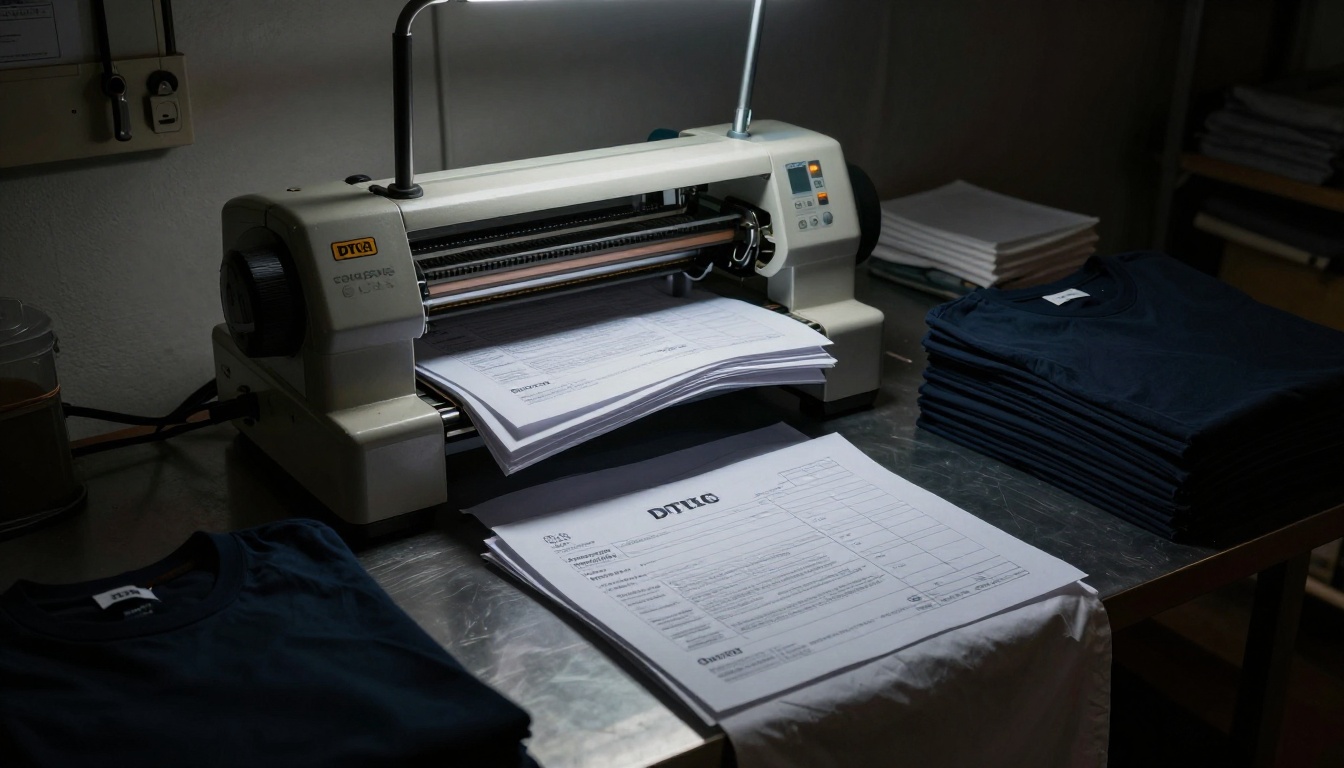
Print shop machines from $1 to $1M: the ROI math Superline’s video skips
Verdict: Half-true — works only if you do the unspoken work. The machine prices and the per-shirt margins are accurate; the “make half a million if you’re lazy” numbers are not.
Superline’s video “We FOUND the Cheapest and Most Expensive Ways to Print Clothes” (about 53,700 views when we looked) is a trade-show tour that walks from a $1 heat-press transfer all the way up to a $1 million Kornit Apollo. It’s genuinely informative on hardware. The trouble starts when the equipment reps start answering the host’s favorite question — “if I’m lazy, how much will I make?” — with numbers like half a million dollars a year. Those figures are real in the sense that someone, somewhere, hit them. They are not what a beginner should plan around.
What the video actually claims
The host tours a convention floor and prices machines across every tier. A single DTF transfer sheet runs about $5–$6 for one, or roughly $1 apiece if you order 250+. A DTG print, one rep says, costs “40 to 50 cents” in ink. An embroidered hat is “cents on a dollar” in thread. The gear climbs fast: a $499 VersaFlex desktop unit, a $10,400 automatic heat press, a $22,000 Happy Japan embroidery machine, a $90,000 eight-head screen-print carousel, a $105,000 Brother GTX 600, and finally the Kornit systems at “$500 plus” and up to a million.
Then come the income claims. A Sawgrass rep says you can make the machine’s cost back “by the end of the year.” The Anatol screen-print rep says a “lazy guy” could make “half a million back in a year” and a hard worker “a million or better.” A Brother rep says some customers see ROI “in the first 6 months.” The host’s recurring framing — cheap to produce, expensive to sell — is the thesis: a print that costs a dollar sells for ten, and “no one’s going to know.”
To his real credit, the host closes with advice that quietly contradicts the reps. Buy used off Facebook Marketplace. Start with $1 transfers and a borrowed iron. Ask hard questions about ink lock-in and print-head costs. And at the top tier, he says it plainly: “It really becomes sales more than production.” That last line is the whole article.
What the method actually requires
Here’s the part the ROI calculators skip. The margin on a single shirt is real — but a margin is not income until something sells, and nothing in this video is about selling.
Look at the gap between a wholesale print job and a retail store. The reps quote business-to-business economics: a shop charges another business $10 for a $1 print, or $20 wholesale for a $4 specialty piece. Fine — if you have wholesale accounts. If you’re going direct to consumers through a Shopify store or an Etsy shop, the fees eat the fantasy. Shopify’s own guide pegs typical print-on-demand margins at 15% to 25%, lower than bulk production because every unit carries its full cost. On a $25 retail shirt, after the blank, the ink, packaging, platform fees, and payment processing, net profit lands closer to $8–$9 — not the $9 “spread” the host implies you simply pocket.
Then there’s the machinery tax the video half-mentions. DTG print heads fail. The host says so himself near the end: heads cost “$900” to “two to four thousand dollars” each, and you replace them “every two years.” The proprietary ink is a recurring toll — most DTG makers formulate a locked ink set so you can only buy from them, which is, as the host says, “really where they make their money.” A printer left idle for a few days can clog and dry out. None of that appears in the “ROI by year-end” pitch.
| Cost the video shows | Cost the video downplays |
|---|---|
| $0.40–$0.50 ink per DTG print | $900–$4,000 per print head, ~every 2 years |
| $1 per DTF transfer (at 250+) | Proprietary ink lock-in, often required |
| $5 blank hat, “cents” of thread | File digitizing skill before a stitch runs |
| $499–$105,000 machine price | Finding enough orders to keep it running |
And the labor nobody quotes in dollars: artwork. Two separate reps warn that pulling a graphic off Google and sending it out produces junk, and that embroidery requires “digitizing” a file stitch by stitch — “the foundation of your work.” That’s a skill, not a button. Production is the easy 20%. The rest is design, sales, and fulfillment.
Who actually wins this game
Who clears real money with a print shop? Operators who already have demand lined up — a wholesale contract, a local sports league, a brand doing its own volume, or a print-on-demand pipeline feeding steady orders. The Hotronix rep running the $93,000 carousel said it better than any disclaimer: “The hard part is selling enough capacity. The easy part is running the machine.” That machine can push 300 shirts an hour. It earns nothing on the hours it sits idle because no orders came in.
The host’s own story fits the pattern. He built Superline on a $2,000 single-color press he ran himself for years, stacking up his first $100,000 before scaling. Not a $1 million robot bought on day one. The people selling you the million-dollar machine make their money whether or not you ever find a customer — which is exactly why their ROI answers are so cheerful.
What you’d realistically earn
Set the “half a million if you’re lazy” line against independent data and it falls apart. Across print-on-demand sellers, the median is sobering: Printify’s 2026 figures put the typical active seller’s revenue — not profit — at roughly $574 a month, with only the top shops clearing $10,000. Industry write-ups describe a ladder where hobbyists make close to nothing for the first six months while they test, casual sellers reach $100–$500 a month, and serious full-time operators get to $1,500–$5,000 before the rare few break out.
A physical shop with real machines can beat those numbers — it also carries real fixed costs those POD sellers don’t have. And the base-rate reality is harsh. U.S. Bureau of Labor Statistics data shows that of businesses born in 2013, 79.6% survived year one, 50.6% made it to year five, and only 34.7% reached year ten. Manufacturing (which is where a print shop sits) runs a bit better than average, but not by enough to turn a $93,000 gamble into a safe bet.
One more thing worth saying for U.S. viewers. Those on-camera “you’ll make half a million” claims aren’t just optimistic — under the FTC’s Business Opportunity Rule (16 CFR 437), a seller who makes an earnings claim is supposed to have written substantiation and to disclose the number and percentage of buyers who actually hit that result. A machine vendor shouting “a million or better” into a camera, with no data, is exactly the kind of representation that rule targets. Readers elsewhere have their own equivalents — the ASA in the U.K., the ACCC in Australia — but the principle travels: an unsubstantiated income number is a sales tool, not a forecast.
Who this is (and isn’t) for
This path makes sense if you already have a route to orders — a following, a local market, wholesale relationships — and you treat printing as the fulfillment arm of a sales business, not the business itself. It suits someone with design or digitizing skill (or the patience to learn it), a few thousand dollars to start small and used, and the stomach to knock on doors. It does not make sense as a hands-off income play. If the appeal is “the machine prints money while I hit the blackjack table,” you’re buying the equipment vendor’s dream, not your own. Start with a $500 used press and $1 transfers, prove you can sell, then scale — the exact order the host himself recommends, once you tune out the ROI calculators.
What to remember
The hardware economics in this video are legit, and so is the host’s closing wisdom: it’s sales, not machinery. What doesn’t survive scrutiny is the middle — the reps’ casual half-million-dollar ROI numbers, offered with no data and no mention of print heads, ink lock-in, idle capacity, or the fact that half of these businesses won’t see year five. Buy the machine for what it is: a tool that rewards whoever already has the orders.
Sources
- U.S. Bureau of Labor Statistics. “34.7 percent of business establishments born in 2013 were still operating in 2023.” 2024. https://www.bls.gov/opub/ted/2024/34-7-percent-of-business-establishments-born-in-2013-were-still-operating-in-2023.htm
- Federal Trade Commission. “Selling a Work-at-Home or Other Business Opportunity? Revised Rule May Apply to You.” 2024. https://www.ftc.gov/business-guidance/resources/selling-work-home-or-other-business-opportunity-revised-rule-may-apply-you-1
- Shopify. “Is Print on Demand Profitable in 2026?” 2026. https://www.shopify.com/blog/is-print-on-demand-profitable
- Shopify. “How To Start a T-Shirt Business: 2026 Guide.” 2026. https://www.shopify.com/blog/start-online-tshirt-business
Related reading on this site: the machines people claim are quietly making them rich and the vending-machine buyer who ended up $1,000,000 in debt.
- Video: We FOUND the Cheapest and Most Expensive Ways to Print Clothes
- Channel: Superline
- Views at review: 53,731
- Watch on YouTube: https://youtube.com/watch?v=JInnOKPM5SI
- Views and figures above were accurate at the time of review and may have changed since publication.