Service Businesses Half-true — works only if you do the unspoken work
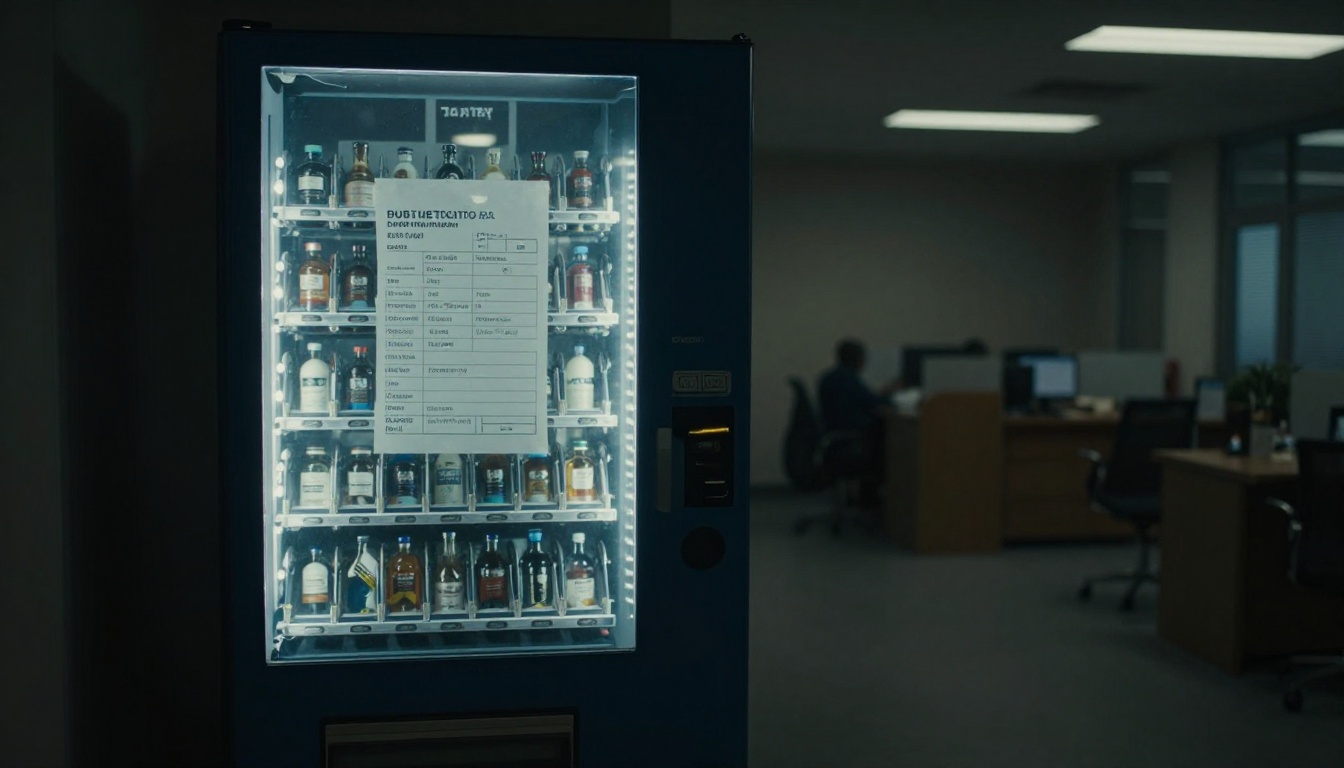
Vending machine passive income: the $1 million debt story the hype skips
Verdict: Half-true — works only if you do the unspoken work. Vending pays real money to people who service their own routes and hunt their own locations; the “passive,” debt-financed, done-for-you version is where fortunes disappear.
Most videos about vending machines show you a guy in a hoodie counting cash next to a snack machine. This one is different. On a Ramsey Show Highlights clip with about 102,000 views, a woman named Emily calls in to say her husband quit a stable job three years ago to build a vending business — and has since piled up close to $1,000,000 in debt. No cash in the bank. Four kids. A HELOC, two mortgages on the house, maxed personal credit cards. Is her story a freak accident, or the predictable other end of the same pitch that fills your feed? It’s closer to the second than anyone selling the dream will admit.
What the video actually claims
The clip isn’t a how-to. It’s a post-mortem. Emily describes a husband who “followed the Robert Kiyosaki way” — the Rich Dad Poor Dad gospel that debt is leverage and you get rich by acquiring income-producing assets fast. He bought vending machines and “micro markets” (the unattended, self-checkout kiosks you see in office break rooms), some owned outright, many on rent-to-own or lease deals. He scaled quickly. He kept going even when his wife pushed back.
Then the money ran out. The business, Emily says, might sell for $450,000–$500,000, but nearly all of that would just clear the debt sitting on the machines themselves — it wouldn’t net a dime toward the credit cards or the house. Host Dave Ramsey walks the math live: sell the business, sell the home, and you’d still be left with roughly $350,000 in personal debt for loans “signed personally,” so they’re not really business loans at all.
Nobody in the clip promises you’ll get rich. But the video only makes sense against the backdrop of the thousands of videos that do — the ones promising “$10,000/month passive income” from a machine that “runs itself.” Emily’s husband bought that promise. This is the invoice.
What the method actually requires
Here’s the part the highlight reel skips. A vending machine is not a passive asset. It’s a tiny retail store that you have to stock, clean, repair, and re-price, in a location you had to negotiate for, on a route you have to drive.
Start with the money going in. NerdWallet puts machine prices at roughly $1,000 to $10,000 each depending on whether they’re new or refurbished, plus $250 to $1,000 to fill a single machine with product (NerdWallet). On top of that you pay the property owner a location commission — usually 5% to 25% of gross sales — for the privilege of being there. The Small Business Administration recommends listing every one-time and recurring cost before you launch, precisely because new owners chronically forget the boring ones: fuel and mileage to restock, credit-card processing fees, insurance, spoilage, and repairs when a bill validator jams.
Now the income. NerdWallet cites an industry rule of thumb: the average machine pulls about $75 a week, or roughly $300 a month, gross. Cost of goods eats a big chunk of that — often around half of revenue — before your location cut and your own labor. Do the arithmetic and a typical machine nets tens of dollars a month, not hundreds. Which is exactly why the winners in this business don’t own a few machines. They own dozens.
And that’s the trap Emily’s husband fell into. Scaling from one machine to fifty doesn’t just multiply the profit — it multiplies the restocking hours, the driving, the cash handling, and, if you finance it, the debt. He tried to buy the scale before earning it, using personal credit as the fuel. Rent-to-own machines carry debt whether or not the location performs. A vacant spot still costs you.
Is any of the “passive income” pitch true?
Yes — for a specific person, running the business a specific way. CNBC has profiled real operators who made it work. One 28-year-old built a route to about $30,000 a month in revenue and says he now works roughly six hours a week (CNBC Make It). Note the details, though: that’s revenue, not take-home profit; the “six hours” came after years of building the route; and he reinvested profits into more machines rather than levering up on credit cards and home equity.
The math works when you own your machines outright (or finance conservatively), find and negotiate your own high-traffic locations, and service the route yourself until the numbers justify hiring help. It stops working the moment you treat it as hands-off from day one.
That “hands-off” version has a name in the industry now, and regulators are watching it.
Who actually wins this game
Three groups win at vending. Owner-operators who grind out locations and drive their own routes. People who bought in early or in an underserved area, before the good office parks and gyms were taken. And — quietly — the companies selling the idea of vending to everyone else.
That last group is the real story. A whole “done-for-you” (DFY) industry now sells turnkey vending as a passive investment: you pay, they place and manage the machines, you collect a check. In August 2026 a Maryland couple sued DFY Vending, alleging they paid $135,000 for five machines under a model where the company would run everything for a 31% cut of gross revenue. According to the complaint, only two of the five machines were ever installed while the couple kept paying rent, inventory, insurance, and Wi-Fi — and the CEO later emailed that the business was “no longer financially viable” (Vending Times).
The U.S. Federal Trade Commission has been chasing the broader “passive income business opportunity” category hard. Its 2024 Operation AI Comply sweep shut down several schemes that promised effortless income from automated online stores — Ascend Ecom (alleged to have taken at least $25 million from consumers), FBA Machine (over $15.9 million), and Ecommerce Empire Builders (FTC). Different product, identical pitch: pay us, do nothing, get rich. The FTC’s own business opportunity enforcement page is a running list of operators who sold that line. (For readers outside the U.S., your equivalents — the UK’s ASA and FCA, Australia’s ACCC, or India’s Ministry of MSME — take similar interest in guaranteed-earnings claims.)
What you’d realistically earn
Set the “$10,000/month passive” fantasy against the floor. A single, well-placed machine you own outright might net you somewhere in the low tens to low hundreds of dollars a month after product, commission, and fees. Five machines you actually service yourself, in decent spots, might clear $500–$1,500 a month for six to eight hours of work a week — and that’s after you’ve spent months landing the locations. Real six-figure income exists, but it lives at 30, 50, 100 machines, with a team or a lot of your own windshield time, built over years.
What you will not find is Emily’s husband’s version working: fast scale, financed on credit cards and home equity, treated as passive. That’s not a business plan. It’s a countdown.
Who this is (and isn’t) for
Vending can make sense if you have $5,000–$15,000 of risk capital you can afford to lose, a tolerance for cold-calling property managers, a reliable vehicle, and a few free hours each week you’re willing to spend restocking and troubleshooting. It rewards patience and route density, not speed.
It is not for you if you’re borrowing the startup money, if “passive” is the whole appeal, or if you’re buying a done-for-you package on the promise that a stranger will run it profitably for a cut. If you can’t service the machine yourself when the operator vanishes — and in this industry, some do — you don’t own a business. You own a debt with a coin slot.
What to remember
Emily’s family didn’t fail because vending is a scam. They failed because they ran a labor-intensive, thin-margin retail business as if it were a money printer, and paid for the machines with the family’s entire financial safety net. The pitch got the first half right: yes, machines can make money. It buried the second half — how much work, how much time, how little per unit, and how ruinous the debt-and-delegate shortcut can be. Owner-operators who go slow and pay cash have a real shot. Everyone chasing “passive” is buying someone else’s exit.
Sources
- FTC. “FTC Announces Crackdown on Deceptive AI Claims and Schemes (Operation AI Comply).” 2024. https://www.ftc.gov/news-events/news/press-releases/2024/09/ftc-announces-crackdown-deceptive-ai-claims-schemes
- FTC. “Franchises, Business Opportunities, and Investments.” 2024. https://www.ftc.gov/going-business
- NerdWallet. “How to Start a Vending Machine Business: Cost, Tips, Pros and Cons.” 2024. https://www.nerdwallet.com/business/learn/how-to-start-a-vending-machine-business
- CNBC Make It. “This 28-year-old built a side hustle that brings in $30,000 a month.” 2022. https://www.cnbc.com/2022/12/06/28-year-old-built-a-side-hustle-that-brings-in-30000-a-month-i-only-have-to-work-6-hours-a-week.html
- U.S. Small Business Administration. “Calculate your startup costs.” 2024. https://www.sba.gov/business-guide/plan-your-business/calculate-your-startup-costs
- Vending Times. “Maryland couple sues DFY Vending over $135K vending machine deal.” 2026. https://www.vendingtimes.com/news/maryland-couple-sues-dfy-vending-over-135k-vending-machine-deal/
For more on the “machines that make you rich” genre, see our breakdown of 9 machines people claim are making them rich in 2026 and our look at one-person businesses with more demand than competition.
- Video: $1,000,000 Of Debt On A Failed Vending Machine
- Channel: The Ramsey Show Highlights
- Views at review: 101,975
- Watch on YouTube: https://youtube.com/watch?v=4L5uyJTjb0o
Views and figures reflect the moment of review and may have changed since publication.