Etsy & Print on Demand Half-true — works only if you do the unspoken work
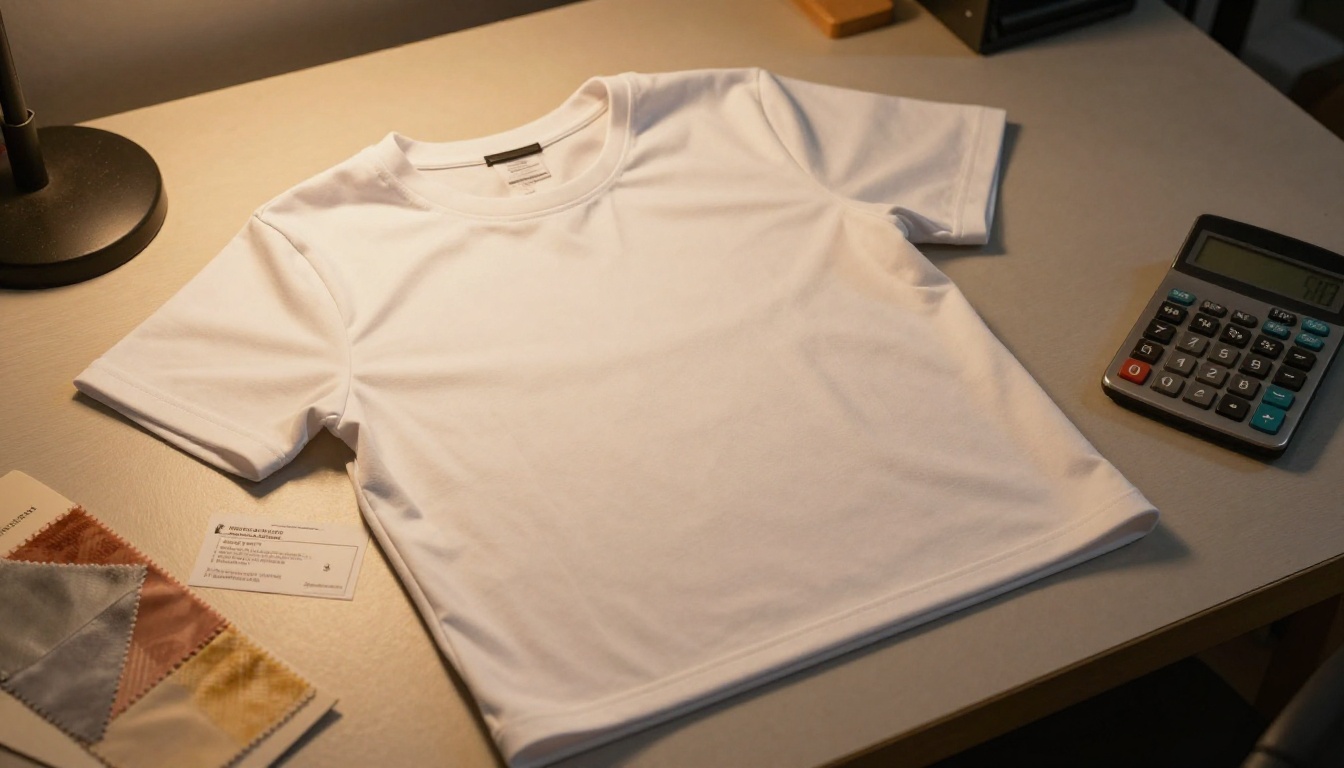
Print on demand 2.0 and TapStitch: the margin math the video skips
Verdict: Half-true — works only if you do the unspoken work. The garment economics really have improved, but the video quietly assumes the hardest and most expensive part — getting strangers to buy — is free.
The video is called “I Was Wrong About Print On Demand. This Changes Everything,” from the MyWifeQuitHerJob Ecommerce Channel. Its argument is a reversal: six months ago the creator told viewers to skip print on demand, and now he says a new kind of supplier — he names TapStitch — makes a real clothing brand possible “with no money.” Is that true? Partly. The per-item math he shows is accurate. What he leaves in the shadows is everything that happens after you upload a design.
What the video actually claims
The creator’s old complaint was margin. His own kids run a print-on-demand shop selling $20 t-shirts that clear “at most $5 per piece,” which means selling 200 shirts a month just to make $1,000. Fair enough — that’s the classic ceiling of graphic-tee POD, where everyone prints on the same Bella Canvas and Gildan blanks and competes on artwork alone.
His new pitch is that companies like TapStitch break that ceiling because they manufacture their own garments instead of reselling blanks. He describes an 800-plus-piece catalog of actual fashion — leggings, sports bras, varsity jackets, jeans — and much better economics. A yoga tank whose blank runs “$9 to $10,” he says, can retail for “$50 or $60,” so “you are clearing $40 to $50 per unit before shipping.” He points out that Lululemon charges $58 for a comparable tank, and that the athleisure market is roughly $460 billion today and projected to nearly double by 2033.
To his credit, he doesn’t claim it’s effortless. “Starting a clothing brand still requires a ton of work,” he says near the end. “You still have to build a brand. You still have to shoot content, and you still have to run ads or grow organically.” Then he pivots to the exciting part — copying the logo-light “lifestyle” marketing of Alo and Vuori — and the caution slides past. That pivot is the story.
What the method actually requires
Start with the phrase “clearing $40 to $50 per unit.” That number is gross margin on the garment — retail price minus what TapStitch charges to make and print it. It is not profit. Profit is what’s left after the platform fee, the payment processor, the return, and, above all, the cost of finding the buyer.
Say you sell that tank for $55. Here’s the honest stack.
| Cost | Amount on a $55 tank |
|---|---|
| TapStitch blank + print | ~$10 |
| Shopify Basic subscription | $39/month, spread across sales |
| Payment processing (Shopify Payments) | ~2.9% + $0.30 ≈ $1.90 |
| Customer acquisition (paid ads) | $90–$130 per new customer |
| Returns / exchanges on apparel | 20–30% of fashion orders |
Shopify’s own pricing page lists the Basic plan and per-transaction card rates, so those two lines are fixed and knowable. The line that wrecks the math is acquisition. Independent e-commerce benchmarks put the average customer acquisition cost in fashion and apparel somewhere around $90 to $130, and Meta ad prices hit record highs in 2025. Do the subtraction: a $45 gross margin minus a $90-plus acquisition cost is a loss on the first order.
That’s not a knock on TapStitch. It’s the reality of paid customer acquisition for any new direct-to-consumer brand. The businesses that survive it do so by earning a second, third, and fourth order from each customer — spreading that one-time acquisition cost across a lifetime of purchases. Which takes months, retention systems, and repeat demand you don’t have on day one.
And apparel returns are brutal. Clothing gets sent back more than almost any other category because of fit. On a print-on-demand model where each item is made to order, a return usually can’t be resold — you eat the full cost. The video’s “$40 to $50 per unit” never mentions that a meaningful slice of units come back.
Is the “copy the big brands” playbook really open to you?
The most seductive part of the video is the marketing argument: Alo, Vuori, and Lululemon barely show their logos in their content, so — the creator reasons — brand recognition is no longer a moat, and if your clothes and your photos look like theirs, “the shopper scrolling Instagram cannot tell the difference at a glance.”
There’s a real insight buried here. Lifestyle content does sell apparel, and AI image tools have genuinely lowered the cost of producing it. But the conclusion doesn’t follow. The reason those brands can run logo-light ads is that they already spent years and hundreds of millions building the recognition that lets a subtle logo work. The video even supplies the counter-evidence: Vuori was founded in 2015 and took years to reach scale; Alo launched in 2007 and didn’t open a store until 2016. Nine years of grinding is the fact, not the footnote.
A brand-new store has no such reservoir. Your logo-light photo doesn’t read as “aspirational” — it reads as “unknown seller,” and it competes for the same ad impressions Alo and Vuori are paying record CPMs to win. Cheaper content doesn’t lower the price of attention. It just means more people are producing lookalike content, which is exactly why acquisition costs keep climbing.
Who actually wins this game
The people who make direct-to-consumer apparel work almost always bring one of four things to the table: an existing audience they can sell to for free, a paid-traffic budget they can afford to lose while they learn, prior expertise in fashion or performance marketing, or early-mover timing before a niche gets crowded. The MyWifeQuitHerJob creator has the first three — a 19-year e-commerce career, a channel, and the capital to test. That’s the pre-existing advantage the “no money” framing hides.
TapStitch is a legitimately better supplier for people in that group. Reviewers confirm it manufactures its own garments, offers white-label neck labels, and skips monthly fees. If you already have distribution, better blanks and fatter margins genuinely help. The tool is real. The starting line is not where the video draws it.
What you’d realistically earn
The creator’s implied promise is a “real business” with margins Lululemon would envy. For a beginner with no audience and a modest ad budget, the realistic first-year arc looks different: several months of net losses while you test products and creative, a decent chance of never becoming profitable at all, and — if you find a repeat-buying niche and reinvest — maybe a few hundred to a couple thousand dollars a month in profit after a year of consistent work. Apparel is one of the hardest e-commerce categories precisely because of fit-driven returns and rising ad costs.
For scale, Etsy is the friendlier storefront and even there the numbers are humbling: a small top tier captures most sales while the median shop earns only a few hundred dollars a year. Etsy also takes its cut — a $0.20 listing fee, a 6.5% transaction fee, plus payment processing — before your garment cost. A better supplier doesn’t change the shape of that distribution.
One regulatory note for U.S. readers. The FTC has moved to tighten rules on money-making and business-opportunity claims, and in January 2025 proposed a new earnings-claim rule requiring sellers to substantiate income representations. This video isn’t selling a course, but the “$40–$50 per unit” figure is the kind of headline number the agency is watching — and it’s gross, not net.
Who this is (and isn’t) for
This makes sense if you already have an audience or content skills, can afford to spend a few thousand dollars learning paid acquisition without needing it back, and treat apparel as a real business with a retention plan — not a passive upload-and-wait scheme. It does not make sense if you’re expecting income in the first few months, have no traffic strategy beyond “post lifestyle photos,” or are counting the garment margin as take-home pay. If you’re comparing this to other low-capital paths, it’s worth reading how similar “just copy me” pitches hold up in our dropshipping breakdown and this look at a $27M store claim.
What to remember
The supplier upgrade is real, the margins on the garment are real, and the marketing insight about lifestyle content has some truth to it. What the video treats as a footnote — that you still have to acquire every customer, absorb returns, and build recognition from zero — is the entire cost of the business. Better blanks don’t sell themselves. They just give you a bigger margin to spend on the part nobody in the video priced out.
Sources
- FTC. “FTC Proposes Rule Changes and New Rule to Deter Deceptive Earnings Claims by Multilevel Marketers and Money-Making Opportunity Sellers.” 2025. https://www.ftc.gov/news-events/news/press-releases/2025/01/ftc-proposes-rule-changes-new-rule-deter-deceptive-earnings-claims-multilevel-marketers-money-making
- Shopify. “Shopify Pricing — Plans and Fees.” 2026. https://www.shopify.com/pricing
- Etsy. “Your Etsy Selling Fees.” 2026. https://www.etsy.com/legal/fees/
- Grand View Research. “Athleisure Market Size, Share & Trends Analysis Report, 2026–2033.” 2026. https://www.grandviewresearch.com/industry-analysis/athleisure-market
- Rivo. “Average Customer Acquisition Cost for eCommerce.” 2025. https://www.rivo.io/blog/average-customer-acquisition-cost-for-ecommerce
- Video: I Was Wrong About Print On Demand. This Changes Everything
- Channel: MyWifeQuitHerJob Ecommerce Channel
- Views at review: 51,255
- Watch on YouTube: https://youtube.com/watch?v=Q-n24ISKMIs
- Views and other figures may have changed since this review was published.