Service Businesses Half-true — works only if you do the unspoken work
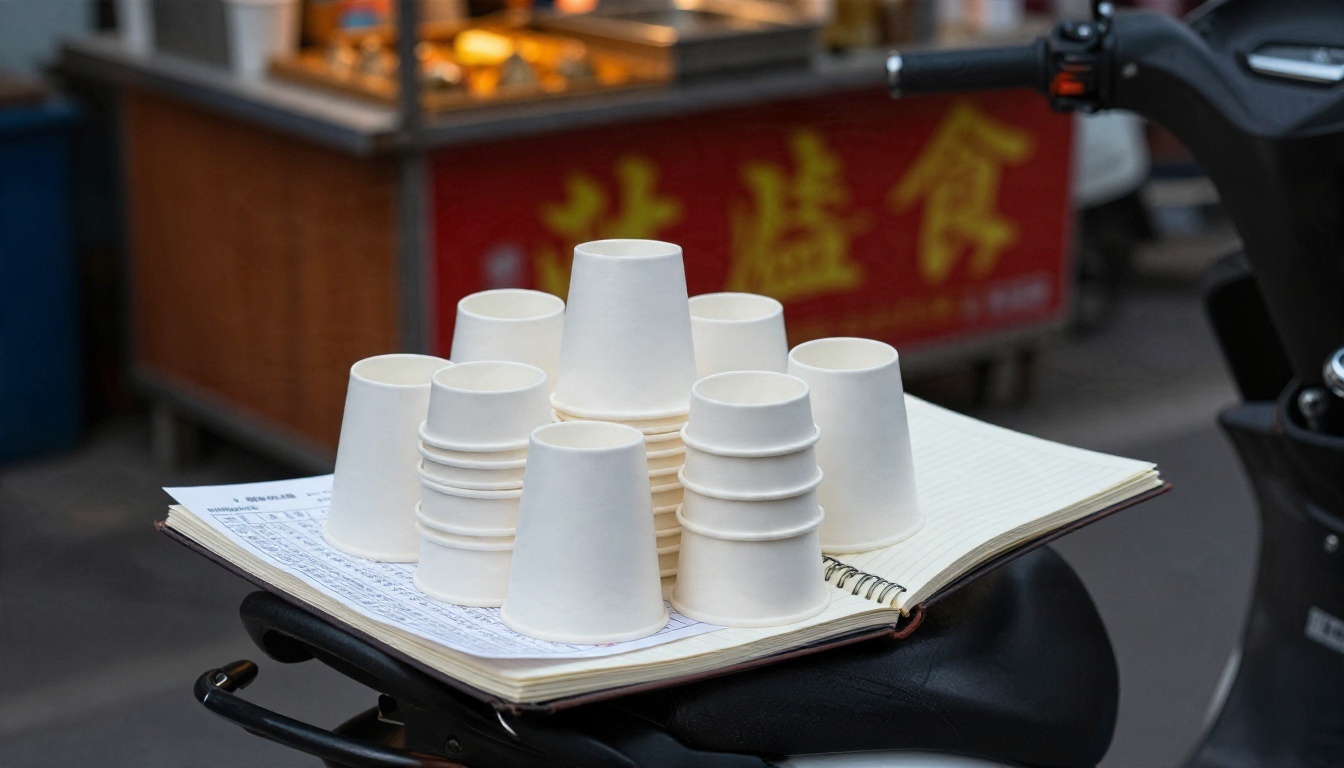
Tea-cup advertising for ₹0: what the viral ‘zero investment’ story skips
Verdict: Half-true — works only if you do the unspoken work. The business model is real and proven, but “zero investment” quietly swaps your money for your legs, your weekends, and your credit risk.
The Pratik’s Playbook video “Start a Business with ₹0 Investment 😳” has pulled in over 684,000 views with a tidy story: a 27-year-old on a ₹22,000 salary turns paper tea cups into ad space, pockets ₹17,000 (~$200) in his first week, and scales to a ₹1,00,000 (~$1,200) order inside three months — all without spending a rupee of his own. Here’s the short answer. The idea is legitimate; a real Mumbai company built it years ago. The “₹0 investment” framing is the part that doesn’t survive contact with a calculator.
What the video actually claims
The pitch is built as a fable. “The characters are fictional and the numbers are market estimates,” the narrator says up front, “but the business is absolutely real.” Prateek notices that people skip YouTube ads and scroll past Instagram, but they hold a tea cup for three to four minutes without looking away. So he prints brand logos, offers, and QR codes on paper cups, gives the cups to tea stalls for free, and charges the advertiser per cup.
The economics are laid out cleanly. His first client, a coaching center, pays ₹1.5 per cup across 20 stalls for four days — 20,000 cups, ₹30,000 revenue. Printing runs about ₹7,000, delivery ₹4,000, design and reporting ₹2,000, for ₹13,000 in costs and ₹17,000 profit. The crucial move: he takes a 50% advance and uses that money to place the cup order, so “not a single rupee from his own pocket.” Later he lands a D2C brand’s order for 1,00,000 cups at ₹1 each, nets ₹50,000 on a 50% margin, and grows from 40 stalls to 400 in a year.
Then the ask. The video closes with an upsell — join a paid Instagram membership (₹170/month, or ₹50 “for life” for the first five members), or buy a ₹499 masterclass on this exact business. That’s the real product being sold here, and it’s worth keeping in mind as you weigh the story.
Is ‘zero investment’ actually zero?
No. It’s deferred and disguised, which isn’t the same thing.
The advance-payment trick is real and clever — getting a client to fund your supplier is standard working-capital practice. But look at what the story itself admits you spend before any advance arrives: a sample printed cup to pitch with, a full Sunday walking College Road to build a 30-stall list, quotes from three manufacturers, a rate card, and a scooter with fuel to run deliveries every morning and collect photos every evening. None of that is free. The U.S. Small Business Administration’s own guidance on calculating startup costs makes the point plainly: even service businesses carry one-time costs (samples, design, permits) and recurring monthly costs (fuel, labor, your own time). A business with no cash cost still has a capital cost — it’s just denominated in hours.
And the risk doesn’t disappear because the cash is small. The video’s own cautionary beat — a customer’s hand burns on a cheap cup, and the brand blames Prateek — is exactly the liability a “₹0” pitch glosses over. You’re the one on the hook for quality, for delivery timing, and for the 50% balance a client might stall on.
What the method actually requires
Strip away the fable and this is a business-to-business advertising sales job. The production step (printing cups) is trivial. The distribution step — convincing paying brands, then actually servicing the campaign — is the whole game, and it’s relentless.
Start with selling. In the story, the first day is three rejections in a row: a mobile shop, a gym, a cafe. Prateek lands his first yes only because exam season gave a coaching center an urgent reason to buy. That’s not a detail — that’s the job. Cold B2B outreach with a new, unfamiliar format means a low hit rate, long explanation cycles, and a lot of “I never thought of this” that doesn’t convert. Expect to pitch dozens of businesses per signed client.
Then the operations. Someone has to design each cup, place the order, quality-check food-grade stock and food-safe ink, distribute to every stall, monitor stock daily (the video shows one stall running out on day two), photograph each site as proof, and send a clean campaign report. At small scale that someone is you, seven days a week. At the 1,00,000-cup scale the narrator celebrates, he hires a delivery boy for ₹15,000 — so the “pure profit” math already depends on paid labor.
There’s also compliance the video mostly waves past. Plastic-lined paper cups are restricted: India banned 19 single-use plastic items nationally from July 1, 2022 under the Plastic Waste Management Rules, and in 2023 the Rajasthan High Court held that laminated (plastic-coated) paper cups fall under that ban because the lining can’t be reused. The video is right that compliant PLA-coated cups cost roughly 35% more — your margin absorbs that. On tax: once revenue climbs, you cross GST registration thresholds (₹20 lakh for services, ₹40 lakh for goods in most Indian states), and you’ll owe income tax on profits. This isn’t India-specific friction, either. The U.K.’s own guide to setting up a business tells sole traders they must register for Self Assessment once they earn over £1,000 and may hit VAT thresholds — every market taxes a real business once it works.
| Cost the video shows | Cost the video downplays |
|---|---|
| Printing (₹7,000–₹30,000 per order) | Your unpaid selling hours (dozens of pitches per client) |
| Delivery (₹4,000, later ₹15,000 with staff) | Sample cups, design, and rate-card setup before any advance |
| Design & reporting (₹2,000–₹5,000) | Quality/liability risk and unpaid 50% balances |
| — | GST registration + income tax once you scale |
Who actually wins this game
This model is real — and that’s not speculation. A Mumbai company called CupShup has sold ad space on paper cups since 2014, and Indian business press (Quartz India, Business Insider India, Entrepreneur India) has documented it working with brands like Paytm, Uber, Ola, Coke and Google, building up to a few crore in annual revenue. So the “absolutely real” claim checks out.
But notice what it took CupShup: years of grinding, a sales team, relationships with 95-plus brands, and systems to service campaigns across cities. The winners here are operators who can sell to businesses and run logistics at volume — not someone looking for passive income. It’s the same pattern behind every “attention” business. As CNBC reported when covering why McDonald’s is building its own ad network, selling attention is a huge, fast-growing market (U.S. commerce media alone is projected past $100 billion by 2028) — but the players cashing in already own the eyeballs and the distribution. Prateek’s “asset,” the video correctly says, is his stall network. Building and defending that network is the work, and it’s the opposite of effortless.
What you’d realistically earn
Take the video’s own best numbers at face value and they still describe a sales job, not a money machine. ₹17,000 in a week sounds great — but it’s one campaign, not a recurring wage, and the narrator notes the client said “let’s do it again next exam season,” i.e., months later. The ₹50,000 and ₹1 lakh profits come from landing large brands, which the story only reaches after three months and 10 campaigns’ worth of portfolio-building.
A realistic first-year arc looks more like this: weeks of pitching for your first paid campaign, several months of small gym/cafe/clinic orders at ₹1.5–₹2 per cup with thin margins, and inconsistent income while you prove the format locally. Steady money arrives only once you have repeat clients and a stall network worth defending — closer to a self-employed sales income than “₹0-investment passive cash.” Could it reach the video’s figures? Possibly, for a persistent seller in a dense market. But “possible for the relentless” is a very different promise than the thumbnail’s.
Who this is (and isn’t) for
This makes sense if you genuinely enjoy face-to-face selling, have 15–25 hours a week to walk a territory and service campaigns, can front a few thousand rupees for samples and fuel, and live somewhere with dense foot traffic (colleges, IT parks, busy markets) where advertisers want local reach. It does not make sense if you’re expecting hands-off income, hate cold outreach, can’t absorb a stalled payment or a quality mistake, or thought “₹0 investment” meant zero effort. The capital barrier is low; the hustle barrier is high.
What to remember
The tea-cup ad business is one of the more honest ideas a viral video has dressed up — it’s a legitimate, proven out-of-home niche, and the advance-payment structure really can reduce your cash outlay. What the story sells as “₹0 investment,” though, is really “investment paid in sweat, time, and risk instead of rupees.” Judge it as a demanding B2B sales business, not a free lunch, and the math suddenly makes sense.
For more reality-checks on business ideas that promise an easy on-ramp, see our looks at why a vending-machine “passive income” dream turned into ₹-equivalent debt and what ₹1 lakh/month “passive income” actually takes.
Sources
- CNBC. “Why McDonald’s is building an advertising business.” 2026. https://www.cnbc.com/2026/09/23/why-mcdonalds-is-building-an-advertising-business.html
- GOV.UK. “Set up a business.” 2026. https://www.gov.uk/set-up-business
- U.S. Small Business Administration. “Calculate your startup costs.” 2026. https://www.sba.gov/business-guide/plan-your-business/calculate-your-startup-costs
- Video: Start a Business with ₹0 Investment 😳 Zero Investment Business Idea
- Channel: The Pratik’s Playbook
- Views at review: 684,061
- Watch on YouTube: https://youtube.com/watch?v=-usOAbcAhqM
- Views and other figures may have changed since this review was published.