Service Businesses Half-true — works only if you do the unspoken work
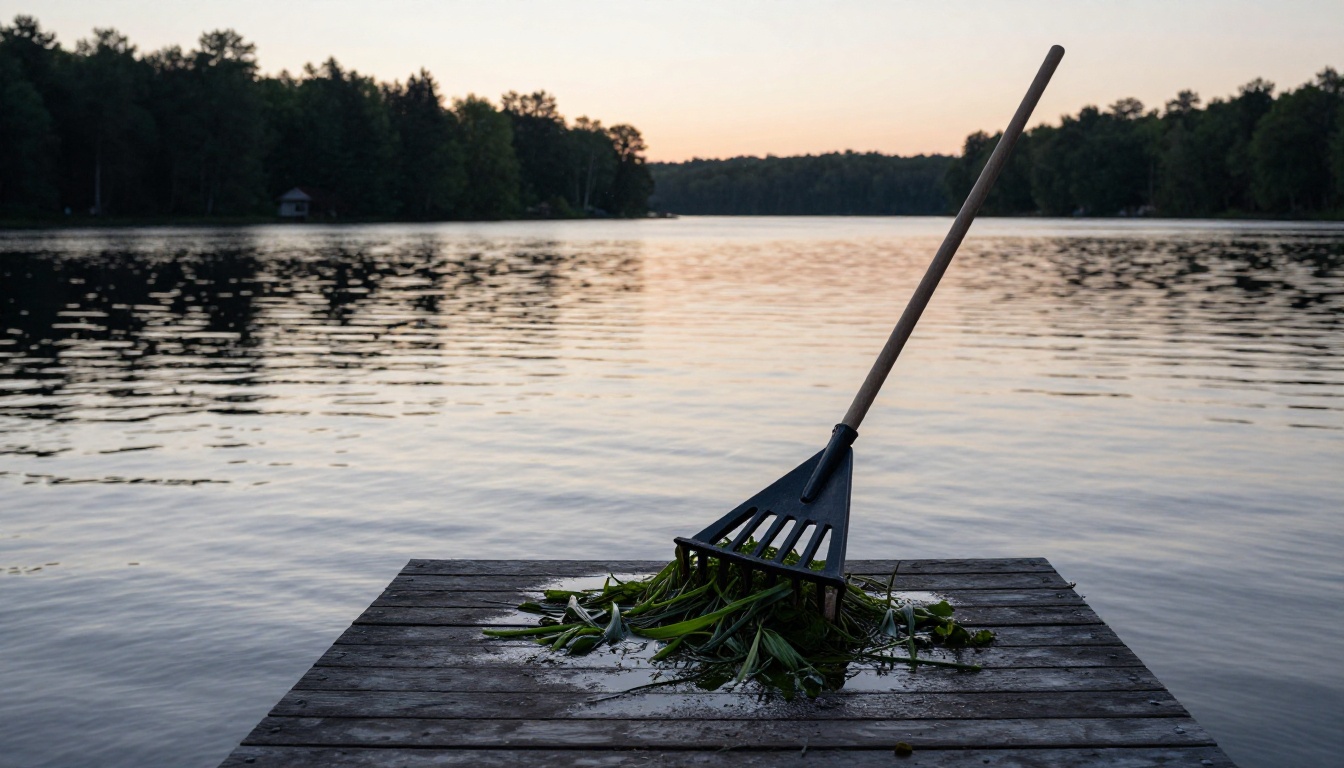
Aquatic weed removal: can teens really clear $2,800 a day?
Verdict: Half-true — works only if you do the unspoken work. The revenue is real, but the YouTube clip skips four prerequisites that decide whether you replicate it.
UpFlip’s recent interview with Joe Weinberger and Declan, the college-age founders of J&D Lake Services, opens with a striking number: they pull aquatic weeds out of Illinois lakes and bill roughly $2,800 a day. Their stated 2025 revenue was about $250,000, and their 2026 goal is $400,000. The number is plausibly real. Replicating it is a different question.
What the video actually claims
The pitch goes like this. Two teenagers, then 15 and 16, started by raking lake weeds for a neighbor in Crystal Lake, Illinois. First paid job: $150 to $200. Startup cost: about $50 and a used garden rake bought on Facebook Marketplace. Five years later they’re running a “full-service lake and pond management company,” with an entry-level Inland Lake Harvester they paid for in cash at $110,000, plus a 42-foot used machine at $35,000 still being refurbished.
The headline numbers in the conversation: a peak month around $80,000 in revenue, monthly expenses of about $17,000 in that same month, and an implied gross margin near 79%. Five seasonal employees last year at $18 to $25 an hour. General liability insurance roughly $2,000 a year. Shop rent $700 a month. Zero paid advertising — they credit the entire customer pipeline to a single video on their old yellow Weedoo boat that hit 6 million views.
Paul, the UpFlip host, asks the obvious question on camera. “I have to be a skeptic here. That’s a crazy margin.” The founders concede that “gross is not net” and that essentially all of last year’s cash went straight back into the new boat.
What the method actually requires
Start with geography. Aquatic weed removal isn’t a digital service; it needs lakes, and not just any lakes. It needs lakes where the shoreline is owned in parcels by homeowners and HOAs wealthy enough to pay multiple thousands of dollars per season to keep weeds away from their docks. The Midwest corridors the founders work — Crystal Lake, Wisconsin’s Eagle River — are densely developed and seasonal. Run the same business out of a rural reservoir or a public swimming lake and the addressable market collapses.
Second, regulation. The video frames “chemical-free, just rake it” as a marketing virtue. It’s also a regulatory shortcut. Mechanical removal and hand-pulling generally don’t trigger pesticide licensing, but as the operation scales the picture changes. In Illinois, large mechanical harvesting on public waters typically needs a state permit, and any chemical work demands both a certified applicator and, in many cases, NPDES coverage. For U.S. operators considering the chemical side, the EPA’s federal certification standards for pesticide applicators require a written exam, a performance test, and continuing education every three to five years. Add herbicide work to this business and your compliance load roughly doubles.
Third, capital. The Inland Lake Harvester ILH5x4-100 “Mini” — the exact model on camera — retails roughly $90,000 to $110,000 depending on configuration, per the manufacturer’s product line. The 42-foot machine in the shop cost another $35,000 used. A 6,000-pound dump trailer ran $7,500. The used military LMTV is a $20,000 line item the founders volunteered themselves. Stack on general liability insurance near $2,000 a year, boat and vehicle insurance ($2,200 to $2,700 combined), and a CPA plus bookkeeper running $725 a month together. The “$50 and a rake” origin story is true. The $400,000-revenue version of the business is a six-figure equipment ladder.
Fourth, labor. Last year’s crew of five at $18 to $25 an hour isn’t an aside. It’s the entire reason the company can clear 4,000 pounds of vegetation a day. The U.S. Bureau of Labor Statistics reports the median hourly wage for grounds maintenance workers was $18.50 in May 2024, with the highest 10% earning over $27.14. J&D pays at and above that median, which is what it takes to retain returning seasonal crews in a tight Midwest labor market.
| Cost line | Reported on video | Independent reference |
|---|---|---|
| Inland Lake Harvester ILH5x4-100 | $110,000, paid cash | ~$90,000–$110,000 base (manufacturer) |
| General liability insurance | ~$2,000/year | $500–$2,300/year typical for landscaping |
| Crew hourly wage | $18–$25/hour | $14.49–$27.14 range (BLS 2024) |
| Shop rent | $700/month | Varies by region |
| Gas | $1,500/month | — |
Who actually wins this game
The honest answer: people who hit one big organic social-media win early, in a service category nobody else is filming. The founders themselves say it plainly — a single Weedoo-boat video at 6 million views took them from 2,000 followers to 10,000 in ten days and built the customer pipeline for the next season. Try to enter the same niche now, with copycat accounts already on the algorithm’s radar, and that organic curve almost certainly flattens.
The second group that wins: operators who reinvest aggressively. The “79% gross margin” looks great until you notice the founders paid $110,000 cash for one piece of equipment and bought a $35,000 backup. Net of that, the real margin lands closer to a normal small-business net — likely 10% to 20% in growth years, before either founder draws a real salary. They confirm this on camera: “We aren’t walking around making $80K, $60K a month in Lambos.”
A third group: people with the physical tolerance for the work. The interview shows a host who chose to rake from the dock because the water was too cold. Crews in this business are in the lake, in scuba boots, lifting 100-plus pounds of wet vegetation per swing.
What you’d realistically earn
Could you copy this and net $250,000 in your second year? Probably not. A more grounded range, based on what’s visible in the interview plus the cost structure above: a solo operator with a rake, a truck, a dump trailer, and basic insurance — call it $10,000 in upfront cost — might book $20,000 to $60,000 of seasonal revenue in year one if they can land 8 to 15 paying lakeside clients. After gas, insurance, dump fees, and modest marketing, that’s roughly $8,000 to $25,000 net.
Hire one helper, finance the entry-level harvester, and gross revenue can plausibly reach the $150,000 to $250,000 range by year three. But a meaningful chunk goes right back into equipment, not into the owner’s pocket. That’s still a real business. It just isn’t “$2,800 a day in your pocket.” It’s $2,800 a day in invoiced revenue during your peak month, on a four-month season, in a regional service market with high physical demand.
Is this niche actually unsaturated?
For now, partly. The aquatic weed and algae management services market is estimated at roughly $2.5 billion globally in 2025 and growing about 7% a year, according to industry research compiled by sector analysts. North America dominates the sector. But “unsaturated on YouTube” isn’t the same as unsaturated in the customer’s local market — established Midwest competitors like Clearwater Plant Harvesters, Midwest Aquacare, and Waterfront Restoration have been doing this for years before any J&D video went viral. The opening right now is for storytellers, not for service providers in general.
There’s also a U.S.-specific marketing caveat. If you build a following on the back of this kind of business and then start selling courses or coaching about it, the FTC’s Business Opportunity Rule treats any specific income claim as needing written substantiation and a one-page disclosure document delivered to buyers at least seven days before purchase. The agency’s endorsement guides similarly require disclosing material connections in testimonials. U.S. readers should keep both rules in mind if their plan is “build the business, then sell the playbook.”
Who this is (and isn’t) for
This is a real path for someone in their late teens to early thirties who lives within driving distance of a lake-dense region (the Upper Midwest, parts of the Northeast, Florida’s freshwater belt), has 30 to 60 hours a week free from May through September, can lift heavy wet material for hours at a stretch, is willing to do direct sales by door-knocking and Instagram, and has the patience to spend year one banking cash for next year’s equipment.
It’s a bad fit for anyone expecting passive income, anyone who can’t be physically in the water, or anyone in a region without dense lakefront residential property. If you’ve already run a different seasonal service business — landscaping, pressure washing, dock installation — and you live near lakes, the on-ramp is shorter than the video suggests. If you’ve never run a service business at all, the on-ramp is longer than the video implies.
For more on niche service businesses that look small on the outside, see our reviews of the most profitable solo business you’ve never heard of and do this to make $10,000 as a student.
What to remember
The headline number is real revenue from a real business two young people built starting with a rake. The catch is that the path required a lakefront-dense local market, a viral video that isn’t on a menu, full reinvestment of cash flow into equipment instead of personal pay, and an appetite for cold-water manual labor. Treat the $2,800-a-day figure as a billing rate during peak weeks, not a take-home number, and the story stays inspiring without misleading anyone.
Sources
- U.S. Bureau of Labor Statistics. “Grounds Maintenance Workers — Occupational Outlook Handbook.” 2024. https://www.bls.gov/ooh/building-and-grounds-cleaning/grounds-maintenance-workers.htm
- U.S. Environmental Protection Agency. “Certification Standards for Pesticide Applicators.” 2024. https://www.epa.gov/pesticide-worker-safety/certification-standards-pesticide-applicators
- U.S. Federal Trade Commission. “Selling a Work-at-Home or Other Business Opportunity? Revised Rule May Apply to You.” 2024. https://www.ftc.gov/business-guidance/resources/selling-work-home-or-other-business-opportunity-revised-rule-may-apply-you-1
- U.S. Federal Trade Commission. “Endorsements, Influencers, and Reviews.” 2024. https://www.ftc.gov/business-guidance/advertising-marketing/endorsements-influencers-reviews
- Inland Lake Harvesters, Inc. “Product Specifications.” 2025. https://inlandlakeharvester.com/
- Video: These Teens Make $2800/Day with a Service No One Talks About!
- Channel: UpFlip
- Views at review: 105,855
- Watch on YouTube: https://youtube.com/watch?v=BvPAWAdv3Qk
View counts and the founders’ stated financials may have changed since this review was published.