Service Businesses Mostly accurate, with one big caveat
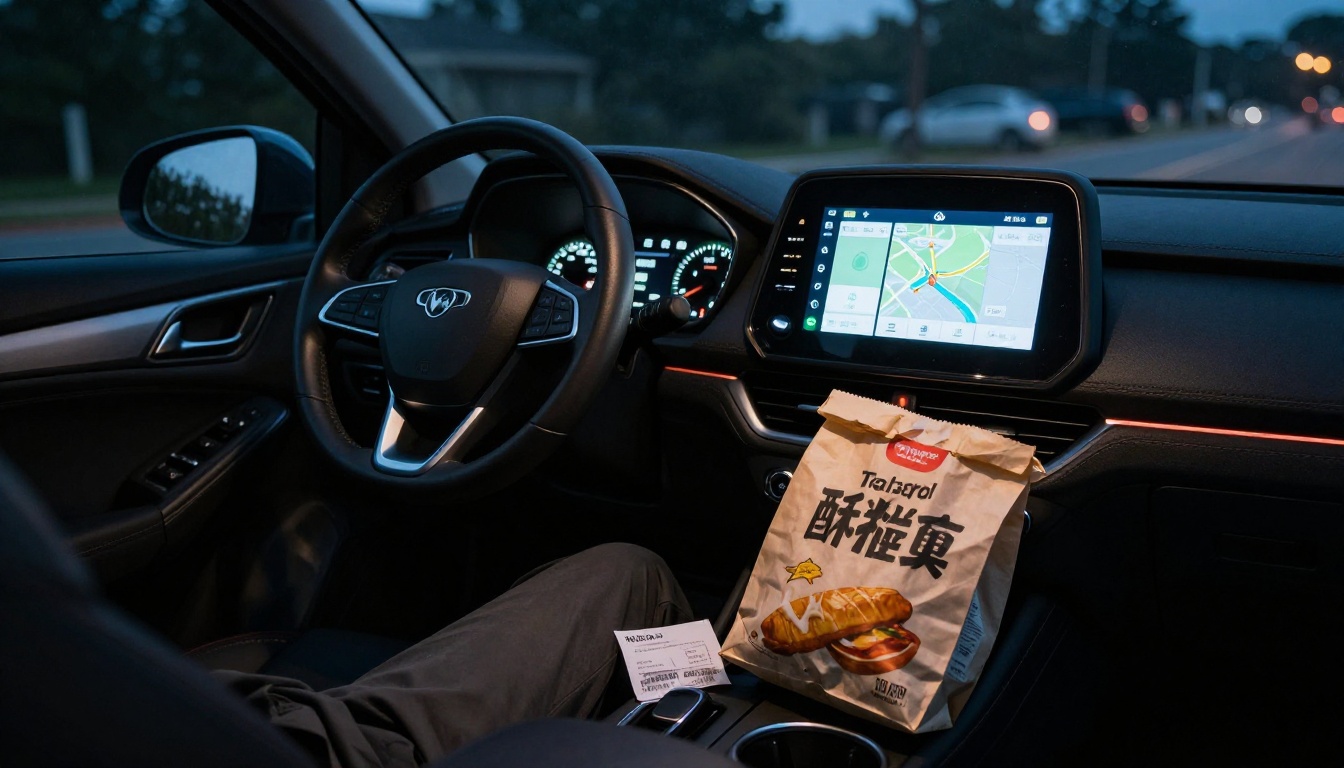
Did the gig economy collapse in 2026? What DoorDash drivers actually earn
Verdict: Mostly accurate, with one big caveat. The pay erosion is real and the platforms have the regulatory record to prove it — but “collapsed” describes drivers’ take-home, not the industry, which is bigger than it has ever been.
Zac Rios’s video “Why The Gig Economy Has COLLAPSED in 2026” has pulled in more than 179,000 views by doing something refreshingly honest for a money-adjacent channel: it tells you not to do the hustle. He drives DoorDash in Los Angeles for 8 hours and 45 minutes, expects $250 to $300, and walks away with $92 before gas. Then he stacks dozens of comments from drivers in New York, Denver, Melbourne, and Las Vegas saying the same thing. The headline question is whether app gig work has actually died. The honest answer: the money has genuinely cratered, but the word “collapsed” is doing a lot of lifting.
What the video actually claims
The thesis is simple. App-based gig work — Uber, Lyft, DoorDash, Uber Eats, Instacart, Amazon Flex, Spark — boomed during the pandemic when bored, housebound office workers ordered everything to their doors. In 2026, Rios argues, that party is over. Orders are down, drivers are everywhere, platform fees keep climbing on both sides, and the pay per job has quietly shrunk.
He backs it with his own LA experiment ($92 gross for a near-nine-hour shift) and a wall of driver testimony: $34 in 8 hours, $14 in 2 hours, $37 from 8 a.m. to 3 p.m. One commenter says they went “from $50 an hour to $20 a day” before quitting. Several point out that the per-mile-and-minute pay model that ran from roughly 2016 to 2025 has been replaced by flat “upfront” offers that, in their words, “pay poverty wages.”
The video’s sharpest point is structural, not anecdotal. Gig drivers are independent contractors, so they eat every cost the platform won’t — gas, maintenance, insurance, and the lack of minimum wage, overtime, benefits, or unions. Rios frames the “be your own boss” pitch as marketing for a model that offloads a delivery company’s costs onto the worker’s own car. He also flags the obvious irony: the course sellers (“consistently make $1,000 a week with the gig app — just buy my guide”) show up precisely when the work stops paying, the same playbook the dropshipping crowd ran.
What the method actually requires to break even
Here’s where the data backs the driver more than the platform. Gross hourly numbers for delivery work look fine on paper — DoorDash, Instacart, and Amazon Flex all advertise something in the $15–$25 range. The problem is everything that comes out of that number.
When NerdWallet actually ran the experiment, the reporter found gross pay landed in DoorDash’s advertised band but netted closer to $10 an hour after deducting fuel and vehicle costs — and that’s before self-employment tax. The IRS lets drivers deduct roughly 70 cents for every mile driven precisely because that’s a real-world estimate of what a car costs to operate. Subtract gas, depreciation, tires, and the 15.3% self-employment tax a W-2 employee never sees, and a $20 gross hour can land near or below the U.S. federal minimum wage of $7.25.
The other half of the story is the take rate — the slice the app keeps. Independent research has found Uber’s cut climbing from roughly a third of the fare a few years ago to over 40% on average, and past 50% on individual trips, as the company moved to “upfront” pricing that prices each ride based on what an algorithm thinks the driver will accept. Drivers feel that as pay that drifts down while the customer’s bill drifts up.
| What you see vs. what you keep | Typical figure |
|---|---|
| Advertised gross (delivery) | $15–$25/hour |
| Net after fuel + vehicle costs | ~$10/hour (NerdWallet test) |
| Net after self-employment tax | often near minimum wage in saturated markets |
| Platform take rate (rideshare) | ~40% average, 50%+ on some trips |
| Benefits, overtime, minimum wage | none — contractor status |
This isn’t a fringe complaint, and regulators have receipts. The Federal Trade Commission charged Amazon with quietly withholding customer tips from Flex drivers — the company had promised drivers $18–$25 an hour plus 100% of tips, then in late 2016 used those tips to cover a lower base rate without telling anyone. Amazon paid $61.7 million to settle, and the FTC mailed refunds to roughly 140,000 drivers. In April 2025 the FTC, later joined by 21 states, sued Uber over its Uber One subscription, alleging the company enrolled people without consent and buried cancellation behind as many as 23 screens. When the U.S. consumer-protection agency keeps showing up, the “the apps treat you badly” claim stops being a vibe.
So has it actually collapsed?
No — and this is the caveat that keeps the verdict from going all the way to the video’s title.
The platforms are not dying. DoorDash reported record order volume in the first quarter of 2026, with revenue up sharply year over year. People are still ordering; the company is thriving. What’s shrinking is the worker’s share of a still-growing pie. Roughly 70 million Americans do some freelance or gig work, and the U.S. Bureau of Labor Statistics counts independent contractors at about 7.4% of all workers as their main job. An industry that big and still expanding hasn’t collapsed. Its economics for full-time drivers have.
The video is also, by construction, a highlight reel of the worst days. A wall of $34-shift screenshots is real, but it isn’t a median. Rios even points this out about other creators — the sponsored “watch me make $270 in 10 hours” posts are cherry-picked too, just in the opposite direction. The truth sits in the unglamorous middle: gig work still functions as supplemental cash, and it has stopped functioning as a reliable full-time wage in saturated metros. Those are two different claims, and “collapsed” blurs them.
Who actually wins this game now
Three groups still come out ahead. Drivers who treat it as a few hours of flexible side money — not a career — and who track mileage so they actually capture the tax deduction. Operators in thinner markets or premium niches (large-vehicle rides, catering-size grocery batches) where saturation hasn’t crushed the per-job rate. And early movers who built habits when per-mile pay was structured fairly, several of whom in the comments say the 2016–2020 window was genuinely good before flat-rate pricing arrived.
The clear loser is the person Rios is really talking to: someone running a household on full-time DoorDash with no other income. The finance-manager commenter put it bluntly — he’s never met anyone thriving on it full-time. The platforms’ own incentives point the same way, with Uber and Lyft openly investing in Waymo and self-driving fleets that need no driver to pay at all.
What you’d realistically earn
If the pitch in your feed says “$1,000 a week, easy,” here’s the calibrated version. A disciplined driver in a decent market, working real hours and stacking apps, can still gross that. But after fuel, maintenance, insurance, and self-employment tax, a realistic net is closer to $10–$15 an hour in a good market and can fall to single digits — or, on the bad days the video documents, near zero — in an oversaturated one. As a side hustle for a few hundred dollars a month, it works. As a salary replacement clearing $50,000+ net, the math rarely survives a calculator. (And none of that net includes a single sick day, paid hour off, or employer health contribution.)
One more risk the video surfaces is worth taking seriously: the contractor relationship gives you almost no recourse. A Boca Raton father went viral after a Lyft driver allegedly used a Google Gemini-generated photo to claim $75 in fake “damage” — caught only because his daughters spotted the AI watermark. Lyft refunded and removed the driver, but the episode cuts both ways: riders and drivers alike are at the mercy of an app’s dispute process, and that’s a real cost of the model.
Who this is (and isn’t) for
This makes sense if you have a paid-off, fuel-efficient car, 5–15 spare hours a week, and you want flexible cash without a second boss — and you go in knowing the per-job rate is lower than it was three years ago. It does not make sense as a primary income if you’re supporting dependents, financing the car you drive, or counting on it to build savings. If you’re in that second group, the honest move is the one several commenters made: keep the gig as a buffer and line up steadier work. If you’re rethinking income entirely, our guides to the best jobs for people starting over in 2026 and the hidden workers powering today’s AI economy both wrestle with the same shift away from precarious platform labor.
What to remember
Rios got the diagnosis right and the headline slightly wrong. Pay has eroded, fees and take rates have climbed, the contractor model dumps every cost on the driver, and federal regulators have repeatedly caught these companies misrepresenting what workers and riders actually pay. That’s a documented decline. But the apps aren’t collapsing — they’re growing while paying their drivers less. Treat gig work as what it now is: thin, flexible side money, not a job with a future.
Sources
- Federal Trade Commission. “Amazon To Pay $61.7 Million to Settle FTC Charges It Withheld Some Customer Tips from Amazon Flex Drivers.” 2021. https://www.ftc.gov/news-events/news/press-releases/2021/02/amazon-pay-617-million-settle-ftc-charges-it-withheld-some-customer-tips-amazon-flex-drivers
- Federal Trade Commission. “FTC Takes Action Against Uber for Deceptive Billing and Cancellation Practices.” 2025. https://www.ftc.gov/news-events/news/press-releases/2025/04/ftc-takes-action-against-uber-deceptive-billing-cancellation-practices
- U.S. Bureau of Labor Statistics. “Contingent and Alternative Employment Arrangements Summary — 2023 Results.” 2024. https://www.bls.gov/news.release/conemp.nr0.htm
- NerdWallet. “How Much Does DoorDash Pay? I Tried Delivering to Find Out.” 2025. https://www.nerdwallet.com/finance/learn/how-much-does-doordash-pay
- CNBC. “DoorDash (DASH) earnings Q1 2026.” 2026. https://www.cnbc.com/2026/05/06/doordash-dash-earnings-q1-2026.html
- CBS12 News. “Lyft driver caught using fake AI damage photos to charge Boca Raton dad a fee.” 2026. https://cbs12.com/news/local/lyft-driver-caught-using-fake-ai-damage-photos-to-charge-boca-raton-dad-a-fee-rideshare-scam-scheme-google-gemini-scam-rideshare-artificial-intelligence
- Video: Why The Gig Economy Has COLLAPSED in 2026
- Channel: Zac Rios
- Views at review: 179,438
- Watch on YouTube: https://youtube.com/watch?v=H2cLT8ewuIk
- Note: view counts and platform figures may have changed since this review was published.