Service Businesses Half-true — works only if you do the unspoken work
The $10K offline side hustle pitch: fence rentals, rugs, and reality
Verdict: Half-true — works only if you do the unspoken work. The five businesses are real, but the “$10K in a day” headline quietly swaps a multi-month contract for same-day cash.
On the Koerner Office Podcast, Chris Koerner and guest Brandon Doyle spend an episode pitching five “offline” ways to make $10,000 — in a day, a week, a month, or a year — with no AI and no internet store. The framing is deliberate: while everyone else chases ChatGPT, they say, the money is in temporary fence rentals, portable mini-golf, inflatable movie nights, art arbitrage, and flipping liquidation rugs. Are these real businesses? Yes. Will most of them clear $10,000 the way the title implies? That’s where the episode gets slippery.
What the video actually claims
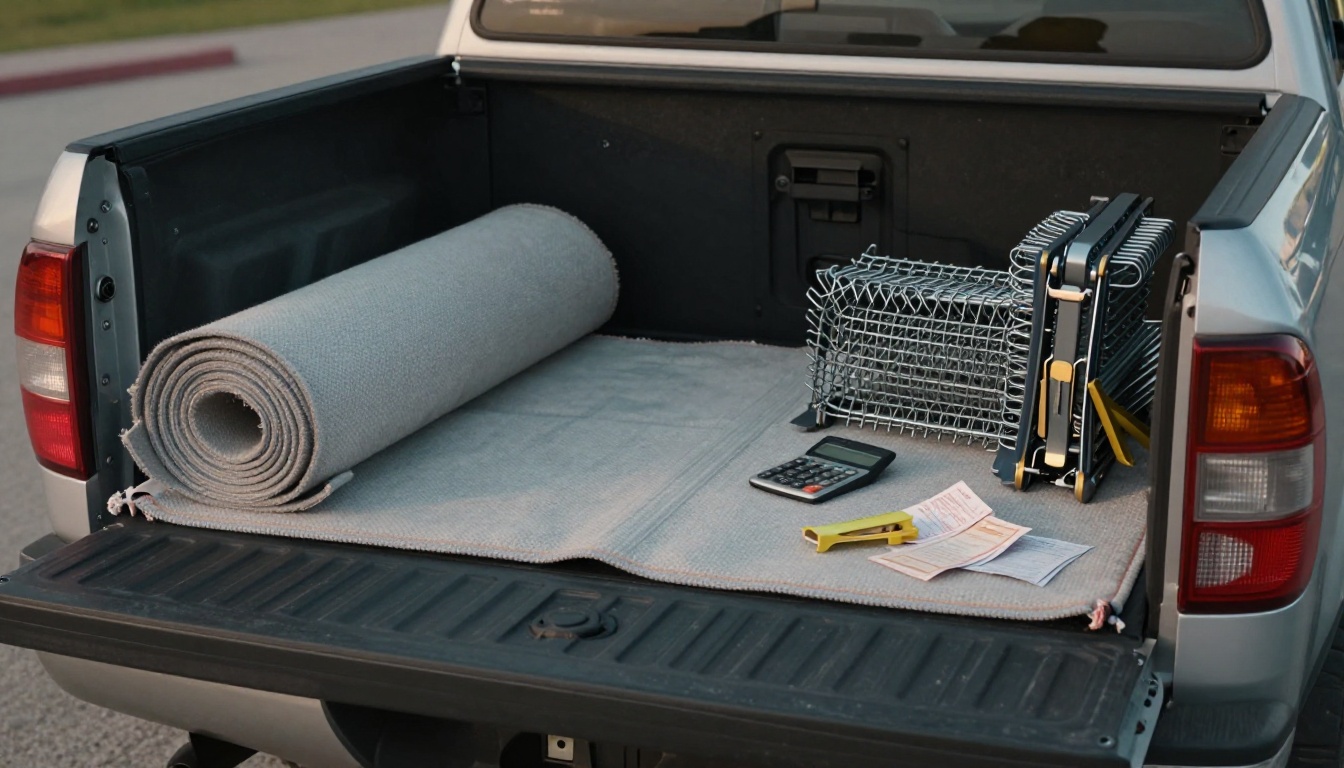
The hosts run through five ideas. A friend in suburban Sacramento bought temporary fence panels, cold-pitched construction sites, and charged “four bucks a linear foot” — supposedly making $20,000 to $30,000 a job, pocketing several hundred grand, then selling the company for $600,000 after 18 months because it got “too passive.” A Facebook Marketplace seller in Dallas builds portable mini-golf holes and rents them to events for $300 per hole per day. Inflatable outdoor-movie kits cost $500 to $3,000 to assemble, and the hosts name real operators — FunFlicks, Southern Outdoor Cinema — that have scaled into the millions.
Then it gets personal. Doyle’s sister-in-law bought 12 to 14 original paintings in the UK for maybe $50 to $100 each and resells them on a small Instagram account for “a few hundred bucks” apiece. And Doyle’s 15-year-old son bought 115 liquidated Costco-return rugs at auction for about $1,500 (roughly $12 a rug, shipping included), then sold around 80 of them at an average of $45 — enough to buy a $3,000 Toyota 4Runner.
The recurring promise is passivity. You pay off your equipment “in one to six rentals,” and after that, in the hosts’ words, “it’s just gravy.”
The math the hosts almost catch themselves on
Here’s the moment that tells you everything. When the hosts crunch the fence numbers on a two-acre lot, they hit a problem in real time. At “four bucks a foot,” a 1,000-foot perimeter is $4,000 — but is that per day or per month? Doyle decides it’s monthly. Which means the “$10K in a day” pitch is actually a $10,000 contract collected over ten months. As Koerner admits on the recording: “you’re signing a $10,000 contract that you collect over 10 months and you’re doing the work for it in a day.”
That distinction — contract value versus cash in hand — is the whole article.
It also matters that the per-foot figure looks high. Industry rental guides put temporary chain-link fencing at roughly $1.50 to $3.00 per linear foot per month, not $4, and buying the panels outright runs $8 to $25 per linear foot (Sonco pricing guide). So before you collect a dollar, fencing a five-acre commercial site means buying thousands of feet of panels. The hosts say you can start with “no money” if customers pay upfront — then immediately stack up the qualifiers: “a lot of ifs, right?” The SBA’s own startup-cost worksheet exists precisely because that gap between one-time equipment outlay and the slow trickle of monthly revenue is what sinks under-capitalized businesses.
What the method actually requires
Strip away the “passive” gloss and every one of these is a sales-and-logistics job.
Take the customer-acquisition line the hosts wave off. “His customer acquisition channel is free because it costs nothing to post” on Facebook Marketplace. Free to post, sure. But someone has to photograph 115 rugs, roll each one out for good lighting, write listings, answer messages, negotiate, and coordinate in-person pickups — and Facebook charges a 10% fee the moment you ship instead of meeting locally (NerdWallet). The fence business is even more sales-dependent: you’re driving to job sites, finding the foreman, and pitching cold. There’s no listing that does that for you.
Then there’s the physical reality. The rugs filled a barn the size of a one-and-a-half-car garage, weighed enough to need two people to move, and took months to clear — through winter, “the worst time to sell rugs.” Doyle nagged his son for weeks about the unsold inventory taking up space. That’s not passive income. That’s a warehouse you happen to call a barn.
And none of the five conversations mention taxes. In the U.S., once your net self-employment earnings hit $400, you owe self-employment tax and file a Schedule C; the IRS also expects quarterly estimated payments since no employer is withholding for you (IRS Self-Employed Tax Center). The teenager’s $3,000 of rug profit is reportable income, not pocket money. Readers in the U.K., Canada, Australia, or India face their own filing thresholds, but the principle travels: resale and rental income is taxable, and the “10K” in the title is gross, not net.
| Idea | Real upfront cost | The unspoken work |
|---|---|---|
| Temporary fence rental | Thousands in panels ($8–$25/linear ft to buy) | Cold-pitching job sites; install/removal labor |
| Portable mini-golf / cornhole | Hundreds per hole in materials | Hauling, setup, event scheduling, storage |
| Inflatable movie nights | $500–$3,000 per kit | Weekend-night logistics, weather risk, bookings |
| Art / watch arbitrage abroad | $50–$150 per piece + shipping | Sourcing, photographing, building a buyer audience |
| Liquidation rug flipping | ~$1,500 per auction lot | Storage, two-person moves, months of listings |
Who actually wins this game?
Look closely at the people in the stories. The fence operator was, in the hosts’ words, “a smart guy and a good salesman” — the close is the business, and he had the skill. The art reseller isn’t really flipping paintings; she’s monetizing a habit she already loved (hunting antique shops on family trips) plus a small, trusting audience she built on Instagram. The mini-golf and inflatable-screen operators that scaled to millions did it over 17 years and across dozens of franchise locations, not in a weekend.
These succeed for the usual reasons offline arbitrage succeeds: a seller who enjoys the legwork, an early mover in a market nobody else bothers with (heavy, awkward rugs that “other people probably aren’t interested in selling”), or an operator willing to do the unglamorous parts — cleaning the bounce house every single time, which the hosts note puts you in the top 10% by itself. Notice what that admission implies. If basic hygiene vaults you into the top tenth, the median operator is doing something pretty rough.
What you’d realistically earn
The single most verifiable result in the entire video is the rug story — and it’s the most honest one. About $1,500 in, roughly $3,000 to $3,600 out across four-plus months of genuinely part-time, on-and-off work, much of it sold at one weekend garage sale. Net of the $300 “interest” Dad charged, call it a couple thousand dollars in profit for a lot of lifting. That’s real. It’s also a long way from $10,000, and the hosts say so plainly: this is the “10K in a year” tier, “honestly, you probably can’t do 10K in a week off rugs.”
That tracks with how reselling actually pays. NerdWallet’s reporting on realistic side hustles frames flipping as a legitimate but variable earner that “depends on your sourcing skills and market demand,” not a fixed paycheck. Liquidation resellers commonly net $200 to $400 per pallet, not the headline multiples — and the occasional “$10,000 a month from a garage” story is the exception that gets quoted, not the median. For a beginner with no audience and no sales reps, expect months of slow, lumpy income before anything resembling four figures a month, if it comes at all.
One more guardrail. U.S. readers should know the FTC is actively tightening the rules on income claims: its 2025 proposal would require sellers of money-making opportunities to hold written substantiation for any earnings claim, and the agency’s data puts the median consumer loss on business and work-from-home opportunities around $3,000. A podcast swapping stories isn’t selling a course here — but the “one guy made $600K” anecdote is exactly the kind of single, unrepresentative number regulators warn against treating as typical.
Who this is (and isn’t) for
This fits someone who has a few thousand dollars of working capital, a vehicle and a garage, weekends free, and — this is the real filter — genuine comfort with cold outreach and physical labor. If you like talking to strangers, hauling heavy things, and grinding out marketplace listings, the rug or fence path can pay for a car or a vacation. It’s a poor fit if you’re capital-constrained, allergic to selling, short on storage, or expecting the “passive” income to arrive without a year of active work first. The episode itself only claims one of the five (rugs) hit its target on the slowest timeline.
What to remember
These aren’t scams, and the hosts aren’t pretending the work is zero — they keep catching themselves mid-pitch. But the title sells passivity and same-day money, while the stories deliver multi-month contracts, barns full of inventory, and a teenager’s part-time grind. The businesses are real. The “$10K in a day” is a contract, not a check. Read it as a menu of legitimate, low-tech hustles, and ignore the timeframe in the headline.
For more on income pitches that quietly depend on doing the boring parts, see our looks at the “laziest” ways to get rich in 2026 and the machines supposedly making people rich.
Sources
- FTC. “FTC Proposes Rule Changes and New Rule to Deter Deceptive Earnings Claims by Multilevel Marketers and Money-Making Opportunity Sellers.” 2025. https://www.ftc.gov/news-events/news/press-releases/2025/01/ftc-proposes-rule-changes-new-rule-deter-deceptive-earnings-claims-multilevel-marketers-money-making
- IRS. “Self-Employed Individuals Tax Center.” 2025. https://www.irs.gov/businesses/small-businesses-self-employed/self-employed-individuals-tax-center
- U.S. Small Business Administration. “Calculate your startup costs.” 2025. https://www.sba.gov/business-guide/plan-your-business/calculate-your-startup-costs
- NerdWallet. “How to Sell on Facebook Marketplace.” 2025. https://www.nerdwallet.com/finance/learn/sell-on-facebook-marketplace
- Sonco. “Temporary Fence Rental Pricing Guide.” 2026. https://www.soncocrowdcontrol.com/blog/temporary-fence-rental-pricing
- Video: Forget AI. Make $10K+ With These Offline Side Hustles
- Channel: Chris Koerner on The Koerner Office Podcast and Brandon Doyle
- Views at review: 69,459
- Watch on YouTube: https://youtube.com/watch?v=dTnidR4eLus
- View counts and other figures were accurate at the time of review and may have changed since publication.