Investing & Dividends Half-true — works only if you do the unspoken work
This article is general information, not financial, tax, or investment advice. Income claims and platform fees change. Talk with a licensed professional before making financial decisions based on anything you read here.
The ‘last big AI opportunity’: data-center gas stocks, after they already tripled
Verdict: Half-true — works only if you do the unspoken work. The underlying trend is real and well-reported, but most of the stocks have already run hard, the video treats 12-month analyst targets as facts, and it slips a paid microcap promotion into the middle.
“Business With Brian” (BWB) tells 74,000-plus viewers that the AI boom’s “last big wealth opportunity” is the picks-and-shovels energy names powering data centers — pipelines, turbine makers, and the metallurgy behind the blades. The trend he describes is genuine: America really is racing to bolt natural-gas power plants onto data-center campuses. But the video pitches a shopping list of stocks that have mostly already tripled, quotes analyst “upside” numbers as if they were promises, and hands you a sponsored microcap in the middle without the skepticism that segment deserves. Is the opportunity real? Yes. Is it still “the last” one, cheap and waiting for you? That’s the part the calculator argues with.
What the video actually claims
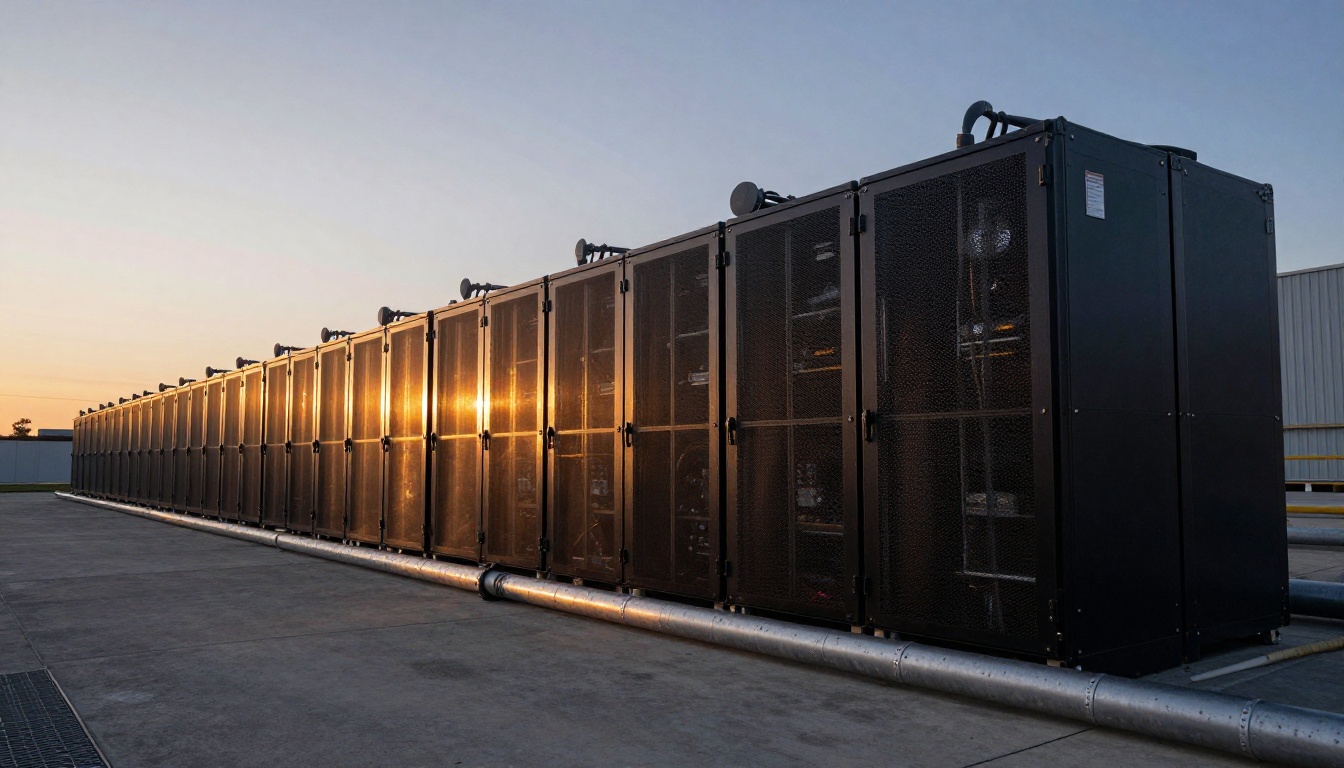
The setup is solid reporting. Investment is pouring into U.S. data centers, over 300 state-level bills landed in the first six weeks of 2026, and many push data centers to supply their own power rather than lean on the grid. The fastest path, Brian says, is an on-site natural-gas turbine plant — up and running in about a year, versus small nuclear reactors that most people don’t expect until around 2030. That framing matches independent reporting almost exactly.
From there he names roughly ten stocks as the “wins no matter who wins” plays: Energy Transfer (a 7% dividend pipeline operator), Eaton (electrical switchgear), GE Vernova (gas turbines, order book “sold out through 2030”), Howmet Aerospace (turbine blades), Baker Hughes, Cummins, Williams Companies, and EQT, the natural-gas producer. For each, he cites a specific analyst “upside” over the next 12 months — 15%, 20%, 34%, “over 35%” for Baker Hughes.
He also opens and closes on Michael Burry — “the man who called the 2008 housing crash” — shorting Caterpillar, one of the crowded winners. The pitch: skip the obvious names, buy the quiet suppliers before the new laws even take effect.
What the method actually requires
Here’s the first thing the video says quietly and then moves past: nearly every stock on the list has already made the move. Brian’s own words — Energy Transfer “more than tripled” since 2021, Eaton “more than tripled,” GE Vernova up “nearly eight times over” since its 2024 spinoff, Howmet “rose roughly 10 times over.” Those are extraordinary backward-looking returns. They are not what you lock in by buying today.
The demand story is real. CNBC reports data-center and AI electricity use is expected to more than double to about 8% of total U.S. consumption by 2030, and that natural gas will carry much of that growth. GE Vernova’s gas turbines are sold out with a backlog measured in gigawatts, with one turbine costing more than $250 million. Microsoft has openly said it’s willing to burn natural gas to keep pace with demand. None of that is hype.
The problem is valuation, and the video never touches it. The same rally that made these stocks winners also made them expensive, which is the entire reason Michael Burry is shorting the theme. CNBC reported that Burry is shorting Caterpillar for the first time ever after it gained 86% in the first half of 2026 and its price-to-sales ratio hit the highest level in at least three decades. Brian uses Burry as an opening hook, then quietly frames his own ten names as the safer version of the same trade — without mentioning that Burry’s argument is about the whole AI-infrastructure complex being overpriced, not just Caterpillar.
And those “20% upside” and “35% upside” figures? They’re 12-month analyst price targets. Targets are opinions with a poor track record, not a rate of return you’re entitled to. Presenting eight of them in a row, each a tidy double-digit number, makes a diversified basket of already-hot stocks feel like a floor. It isn’t one.
What about the stock buried in the middle?
Roughly halfway through, the tone changes. Brian pivots to “today’s sponsor,” Promino Nutritional Sciences — ticker MUSCLF (also quoted as MUSLF, a Canadian-listed microcap) — a protein-drink company he says sits at the “intersection” of aging, GLP-1 users, and unhappy protein drinkers. He notes the stock is “near the cheapest it’s ever been,” the market cap is “still tiny,” and directs you to a link in the description. He discloses it’s sponsored and says “do your own due diligence.”
That single segment is a different animal from everything around it. The SEC’s own investor alert on fraudulent stock promotions describes exactly this shape: a paid promotion of a small stock, delivered alongside legitimate-sounding analysis, where the disclosure exists but the compensation source and amount aren’t fully spelled out. The SEC’s microcap guide adds that thinly traded small caps are easier to move on hype precisely because reliable public information is scarce. To be clear: a disclosed sponsorship is legal, and this is not an accusation of fraud against anyone. But a “tiny market cap” stock being talked up in a paid segment is the highest-risk item in the video, and it’s presented with the least skepticism.
Who actually wins this game
The people who won the data-center energy trade already won it — investors who bought GE Vernova near its $140 spinoff price in 2024, or Energy Transfer around $6 in 2021, before the AI narrative was consensus. That’s the pattern with every “get ahead of this” pitch: the biggest gains belong to the early movers, and by the time a stock is a YouTube thumbnail, the crowd has arrived.
That doesn’t mean the suppliers are bad businesses. Energy Transfer’s roughly 7% distribution is real and, per multiple analyses, covered — though as a master limited partnership it hands you a K-1 at tax time and comes with the payout variability a high yield implies. Steady industrials like Cummins and Eaton can compound for years. But “own good businesses for a decade” is a very different claim from “the last big wealth opportunity, get ready now.” Only one of those is what the title sells.
What you’d realistically earn
Nobody can tell you what these stocks return from here, and neither can the video — the difference is that it implies it can. A fair way to hold the two framings side by side:
| What the video suggests | What’s actually knowable |
|---|---|
| “Over 35% upside” (Baker Hughes) | A 12-month analyst target, not a guaranteed return |
| Stocks that “tripled since 2021” | Past gains already captured by earlier buyers |
| “Safer way” to own the buildout | A basket still exposed to an AI selloff Burry is betting on |
| Sponsored microcap “near its cheapest” | The single highest-risk name, per SEC guidance |
If the AI capital-spending boom keeps running, this group can do well. If Burry is even partly right and the infrastructure trade deflates, cyclical suppliers trading at multi-decade-high valuations tend to fall furthest. Both outcomes are live. The honest expected range is “wide, and dependent on a macro bet the video doesn’t ask you to make consciously.”
Who this is (and isn’t) for
This makes sense for someone who already invests, understands they’re buying after a large run, sizes positions so no single name can wreck them, and treats the gas-power theme as one slice of a diversified portfolio held for years. It does not make sense for a beginner who hears “last opportunity,” opens a brokerage account, and puts meaningful money into a ten-stock list — least of all the sponsored microcap — expecting the tripling to repeat on schedule. If you can’t explain why a stock is cheap or expensive today, the analyst-target numbers won’t protect you.
What to remember
The trend is real, the businesses are real, and the reporting behind the setup checks out. What’s missing is valuation, position sizing, and a clear-eyed read that most of these names have already made their big move — plus a paid microcap promotion that deserves far more caution than the video gives it. Real opportunity, real homework. The video sells the first and skips the second.
For related reading, see our looks at six “must buy now” stock picks and the “forget NVDA” quantum-stock pitch.
Sources
- CNBC. “Michael Burry says he’s shorting Caterpillar for the first time after it nearly doubled in the AI-driven rally of 2026.” 2026. https://www.cnbc.com/2026/06/30/burry-shorts-caterpillar-after-it-nearly-doubled-in-ai-rally-of-2026.html
- CNBC. “How GE Vernova builds the massive gas turbines powering the AI data center boom.” 2026. https://www.cnbc.com/2026/06/27/ge-vernova-gas-turbines-ai-data-centers.html
- CNBC. “Microsoft is open to using natural gas to power AI data centers to keep up with demand.” 2025. https://www.cnbc.com/2025/03/11/microsoft-is-open-to-using-natural-gas-to-power-ai-data-centers-ameet-ballooning-demand.html
- SEC. “Updated Investor Alert: Fraudulent Stock Promotions.” 2024. https://www.sec.gov/oiea/investor-alerts-bulletins/ia_promotions.html
- SEC. “Microcap Stock: A Guide for Investors.” 2023. https://www.sec.gov/about/reports-publications/investorpubsmicrocapstock
- Video: The Last Big Wealth Opportunity of the AI Boom (Get READY!)
- Channel: BWB - Business With Brian
- Views at review: 74,226
- Watch on YouTube: https://youtube.com/watch?v=bL6kmFvBsX8
- Views and figures were accurate at the time of review and may have changed since publication.