Investing & Dividends Mostly accurate, with one big caveat
This article is general information, not financial, tax, or investment advice. Income claims and platform fees change. Talk with a licensed professional before making financial decisions based on anything you read here.
Professor G’s “2026 market outlook”: the three July dates, checked
Verdict: Mostly accurate, with one big caveat. The facts hold up — it’s the “circle these dates and pay attention or else” framing that quietly works against the average investor.
Nolan Gouveia — “Professor G” on the Investing Simplified channel — opens his July 11 video with a red-siren thumbnail and a promise: three dates in the next 14 days are “absolutely going to be moving your money.” The video has north of 100,000 views. Unlike most of what lands on this desk, the underlying facts here are surprisingly solid. The catch isn’t what he says. It’s what the packaging nudges you to do.
What the video actually claims
Professor G lays out three July catalysts. First, July 14: the June inflation report, arriving with a “new Fed chair, Kevin Warsh” who’s “a hawk and not hiding it.” He says May inflation hit 4.2%, the hottest since 2023, and that the market is pricing a 77% chance of a rate hike by year-end. Second, bank and big-tech earnings on July 14 and 16 — JPMorgan and the money-center banks first, then Taiwan Semiconductor as the tell for “the AI trade.” Third, the trillion-dollar AI capex question: the four biggest tech giants spending roughly $750 billion this year, and whether that pays off or marks where “the crash starts.”
Threaded through all of it is oil (Middle East tension, the Strait of Hormuz) feeding inflation, and a more optimistic theme he calls the “great rotation” — market breadth improving as banks, industrials, healthcare, and small caps join a rally that used to rest on a handful of names.
To his credit, he says the words most finance creators skip: “This is not financial advice, and I’m not a financial advisor.” He also mentions, almost in passing, that he works with people “one-on-one in consultations” on their portfolios. Hold that thought.
Do the facts hold up?
Mostly, yes — which is rarer than you’d think for a video with a 🚨 in the title.
The May CPI print really did come in hot at a 4.2% annual rate, and markets really did respond by raising the odds of a Fed hike rather than a cut, as CNBC reported at the time. Kevin Warsh really is the sitting Fed chair, and markets really did reprice for a more hawkish Warsh Fed than expected after his June meeting. The “great rotation” into industrials, financials, and small caps is a genuine, widely-covered 2026 story, not something he invented.
Where does he stretch? The one number worth flagging is that “77% chance of a rate hike.” As of July 9, prediction-market traders on Kalshi put the odds closer to 50–54%, with CME’s FedWatch tool ranging into the 60s depending on the meeting. So the direction is right — a hike is on the table for the first time in years — but the specific figure sits at the high end of what the data supports. It makes the moment sound more settled than it is. A hawkish tilt reads differently from a near-certainty, and 77% is closer to the second.
That’s a small overstatement, not a fabrication. On the whole, this is a well-researched market recap.
What the framing actually asks of you
Here’s the caveat, and it’s the whole story.
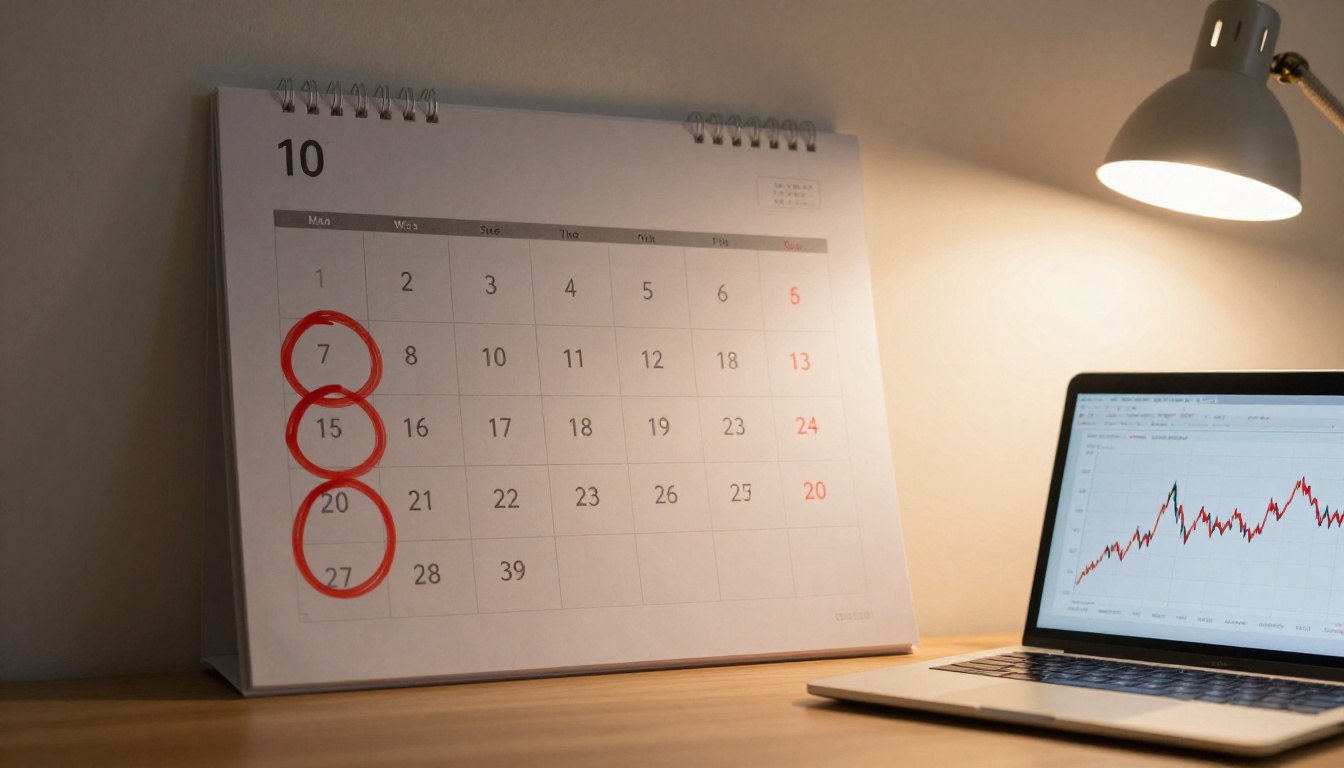
Every factual claim in the video is wrapped in language of urgency and consequence. “Circle this date.” “If you miss them, you’re not going to really understand.” “Watch the price of oil like it’s a stock you own.” The implication — never stated outright, which is exactly why it works — is that a good investor should be tracking these catalysts closely and, presumably, positioning around them.
But what would you actually do with “there’s a coin-flip chance of a rate hike”? Buy? Sell? Wait? The honest answer for most people is nothing, and the regulators who have no product to sell say so plainly. The SEC’s investor-education arm puts it about as bluntly as a government agency can: “it’s time in the market, not timing of the market, that generally leads to long-term investing success,” and “if you have the right investment plan, you shouldn’t need to make rash decisions during times of market volatility.”
The math backs the sermon. Stocks have beaten cash in 86% of rolling 10-year periods and 100% of 20-year periods since 1926. The cost of trying to dodge the bad days is that you tend to miss the good ones, which cluster right next to them — a handful of the market’s best sessions, often within days of the worst, account for a wildly outsized share of long-run returns. A video that trains you to treat two weeks in July as decisive is, however unintentionally, training you to do the thing the data says not to do.
Who actually wins from “circle these dates” content
Ask a plain question: who benefits when a retail audience believes that following the Fed calendar closely is what serious investors do?
Not, mostly, the viewer. Nobody watching this video is going to out-trade JPMorgan’s desk on the July 14 CPI print. The people who win are the ones for whom your attention is the product. That includes the creator — engagement, watch time, and a channel that reliably delivers a “BREAKING” hook every Saturday — and it includes anyone the funnel points toward. Professor G’s one-on-one consultations sit at the end of that funnel. There’s nothing inherently wrong with paid coaching. But urgency content and a paid-advice offer are a natural pairing, and the more indispensable the weekly dates feel, the more valuable a guide to navigate them becomes.
Institutional investors do watch these dates. They also have mandates, hedging tools, and risk desks. You have a 401(k) and a day job. The same calendar means very different things to those two audiences, and the video never draws that line.
What you’d realistically gain by acting on July
For a long-term investor putting money in on a schedule, the realistic value of trading around the three July dates is close to zero — and can easily be negative after taxes and spreads. Selling before a CPI print that “might” trigger a hike means guessing right twice: that the number lands hot and that the market hasn’t already priced it. As the video itself admits, much of this “is starting to kind of price in.” Markets move on the surprise, not the scheduled event, and the surprise is by definition the part you can’t calendar.
The SEC’s ten things to consider before you make investing decisions leads with drawing a personal financial roadmap and understanding your time horizon — not with tracking the next Fed meeting. If your horizon is a decade or more, the correct response to “three huge dates in the next 14 days” is usually to keep your contribution schedule and do nothing. Boring. Also, per the historical record, more profitable than most alternatives.
Who this is (and isn’t) for
If you enjoy following markets, want a competent weekly recap, and can watch this kind of video the way you’d read a sports column — informative, not a to-do list — it’s fine. Genuinely. It’s more accurate than most of the genre.
It’s a poor fit if you’re prone to acting on urgency, if you’re early in building a portfolio and still rattled by volatility, or if a 🚨 headline makes you want to log in and rearrange things. For that viewer, the danger isn’t misinformation. It’s the steady conditioning that short-term events demand short-term action, when your situation calls for the opposite.
What to remember
Professor G gets the facts mostly right — hot inflation, a hawkish Warsh Fed, real rotation, real earnings catalysts — with one number (the 77% hike odds) running ahead of what the market’s actually pricing. The reporting is sound. The framing is the catch: “circle these dates” quietly sells the idea that watching closely and acting is what good investors do, when the regulators and the historical data both say the opposite for anyone with a long horizon. Read it as a recap. Not as instructions.
For related reads, see our breakdown of another Professor G–style catalyst video, the “great market flip” update, and our look at the “quiet tax” Fed-fear pitch.
Sources
- SEC / Investor.gov. “Don’t Panic, Plan It!” 2025. https://www.investor.gov/additional-resources/spotlight/formerdirectorlorischock-directors-take/dont-panic-plan-it
- SEC. “Ten Things to Consider Before You Make Investing Decisions.” 2025. https://www.sec.gov/investor/pubs/tenthingstoconsider.htm
- CNBC. “Markets raise chances for a Fed rate hike following hot inflation report.” 2026. https://www.cnbc.com/2026/05/12/markets-raise-chances-for-a-fed-rate-hike-following-hot-inflation-report.html
- CNBC. “Markets are set for a much more hawkish Warsh Fed than expected.” 2026. https://www.cnbc.com/2026/06/18/markets-are-set-for-a-much-more-hawkish-warsh-fed-than-expected.html
- CNBC. “Kalshi traders see roughly 50% odds of a rate hike in 2026 as Fed is split on policy.” 2026. https://www.cnbc.com/2026/07/09/kalshi-traders-see-roughly-50percent-odds-of-a-rate-hike-in-2026-as-fed-is-split-on-policy.html
- Video: 🚨BREAKING: 2026 Market Outlook (Expect Major Change in July)
- Channel: Investing Simplified - Professor G
- Views at review: 102,563
- Watch on YouTube: https://youtube.com/watch?v=bVfmqJXFG0A
- Note: view counts and market figures cited above may have changed since this review was published.