Affiliate Marketing Half-true — works only if you do the unspoken work
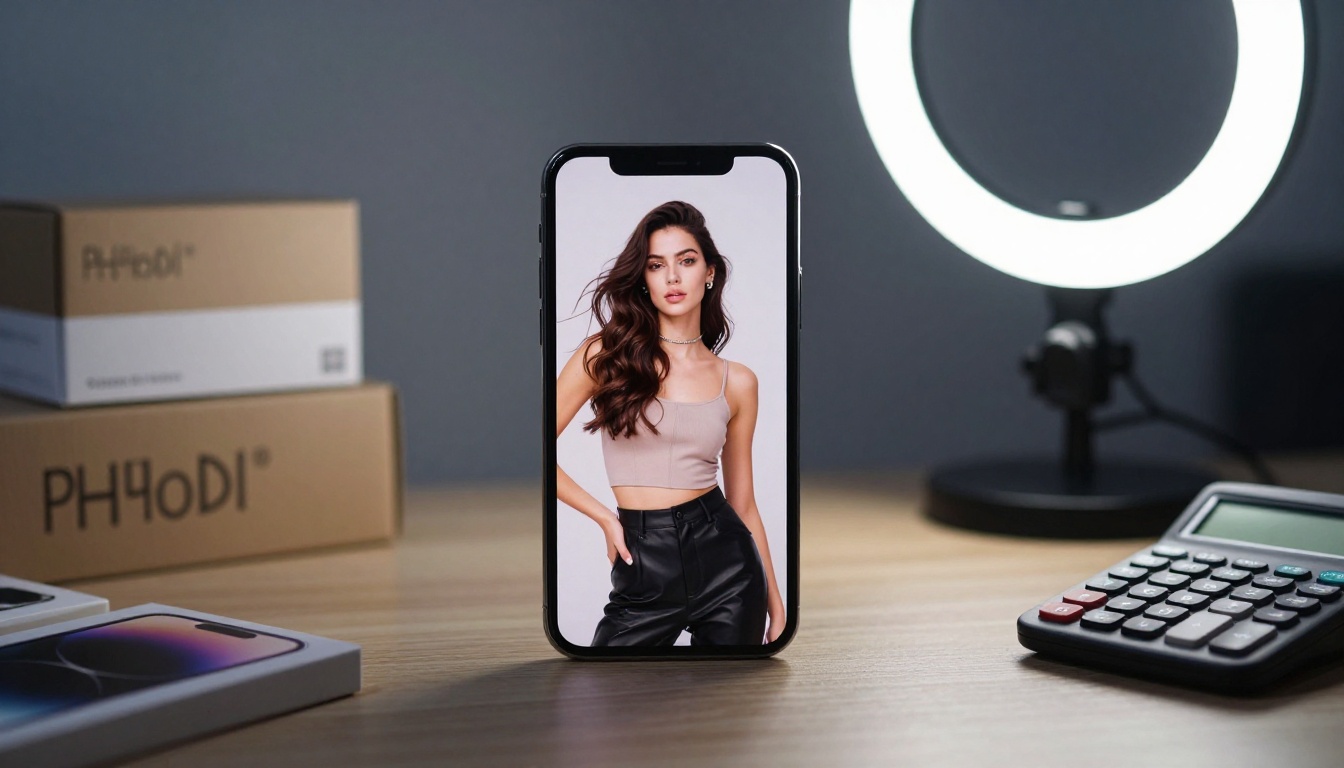
The AI-model affiliate side hustle: real workflow, missing math
Verdict: Half-true — works only if you do the unspoken work. The build is cheap and genuinely doable in an afternoon; the income depends on repeatable virality and on rules the video never mentions.
Wholesale Ted’s video “The AI Model Side Hustle That’s Making People RICH” walks you through a seven-step workflow: spin up a hyperrealistic AI fashion model, post short videos of “her” using products, and funnel curious commenters to Amazon affiliate links in your bio. The host, Sarah, frames it as “a very passive source of income.” The production side of that claim is accurate — you really can generate these clips for a few dollars a month. The money side is where the pitch quietly leaves the hard parts out.
What the video actually claims
The core idea: create an AI influencer (the video uses Google’s Nano Banana Pro for images and a Google video model called “Omni,” accessed through a paid tool called Higgsfield), animate still frames into 3–6 second clips, stitch them into a montage in CapCut, swap in an ElevenLabs voice, and post to Instagram. When viewers ask where to buy the clothes or furniture the model is showing off, you point them to a free Linktree bio page full of Amazon Associates links.
Sarah’s pitch for why Amazon is the monetization engine rests on three points. Amazon Associates doesn’t require you to have an existing following (just an Amazon account and being 18+). It has a 24-hour cookie, so if a viewer clicks your link and buys anything else on Amazon that day, you earn on all of it. And Amazon’s catalog is huge, so you’re not limited to clothes — she demos interior-design and furniture angles too.
She shows Instagram accounts that, she says, pulled 17 million and 1 million+ views within months of starting. No dollar figure is attached to those accounts. The income claim is implied by the title and by screenshots of “high earnings” — not stated as a specific monthly number the viewer should expect.
What the method actually requires
Start with the commission rate, because it’s the number the video glosses. Amazon Associates pays roughly 4% on apparel, shoes, watches, jewelry, and accessories — the exact categories those AI fashion clips promote. Furniture and home sit around 3%. The 24-hour cookie is real and does capture unrelated purchases, but it only fires on the first click into Amazon, and a huge share of shoppers already have items in their cart or buy nothing. On a $40 dress at 4%, you clear about $1.60 per converted click.
Now the traffic. Sarah’s framing — “the products sell themselves, no hard selling, free organic traffic” — is the load-bearing assumption, and it’s the one she doesn’t quantify. To earn $1,000 in a month at ~$1.60 per sale, you need on the order of 600+ completed Amazon purchases attributed to your links. That requires tens of thousands of engaged viewers clicking through, which requires videos that reliably go viral. The viral accounts she shows are survivors; you’re not seeing the thousands of identical AI-model accounts that posted the same kind of montage and got 200 views.
There’s also a keep-your-account clause the video skips. Amazon Associates requires you to make at least three qualifying sales within your first 180 days or the account is closed, and Amazon reviews whether your social accounts have genuine content and real engagement before approving you. A brand-new faceless AI page with no followers is exactly the profile Amazon scrutinizes.
Then the tool stack. It’s cheap, but it isn’t free past the trial:
| Tool | Role in the workflow | Typical cost |
|---|---|---|
| Higgsfield (Nano Banana Pro + Omni) | Image + video generation | Paid tiers (starter/plus to test, “ultra” to scale) |
| ElevenLabs | Voice changer / AI voice | $5/mo (Starter, billed annually) |
| CapCut Pro | Montage + AI upscaling | Free trial, then subscription |
| Linktree | Bio link page | Free tier works |
The ElevenLabs Starter plan runs about $5 a month billed annually, per its 2026 pricing, and it’s the cheapest tier with a commercial license — which you need to monetize. Three of the four tools in this chain are the host’s affiliate links, which is itself worth noticing: the video earns whether or not your AI model ever does.
Is “passive” the right word here?
Not in year one, and not the way the video uses it. NerdWallet’s guidance on side hustles is blunt about affiliate income: it “can take several weeks to get up and running, but much longer to make money,” and it sits in the active-effort bucket until you have a library of content that keeps pulling traffic (NerdWallet, 2026). A single viral clip does keep earning for a while — that part of Sarah’s “post once, earn for months” argument is true. The catch is that Instagram’s algorithm rewards consistent posting, so most of these accounts are shipping new montages several times a week to stay in the feed. That’s a content job, not a hands-off asset.
The rules the video never mentions
This is the part that’s changed most in 2026, and it’s absent from the tutorial entirely.
In the U.S., the FTC’s Endorsement Guides treat an affiliate link as a material connection that must be disclosed “clearly and conspicuously.” The 2023 revision explicitly extended this to virtual influencers and AI-generated personas — the Commission’s guidance says the same disclosure rules apply “through a CGI avatar or synthetic voice as through a human creator” (FTC, 2024). An AI model recommending an Amazon product for commission, with no “#ad” and no “this is AI-generated” label, is squarely the thing regulators have said they’re watching. (U.S. readers face per-violation civil penalties; the FTC set the 2026 figure above $53,000.)
The platform risk is just as concrete. On August 31, 2026, Instagram began labeling undisclosed AI-generated profiles and cutting their reach — unlabeled AI profiles can be made “non-recommendable,” meaning they stop being shown to non-followers until a label is added (TechCrunch, 2026). The entire model in this video depends on organic reach to non-followers. A label that throttles exactly that reach is an existential threat to the strategy, not a footnote.
Who actually wins this game
The accounts Sarah points to are the winners, and they share a profile. They were early — AI fashion montages were novel six to twelve months ago, before the feed filled with them. They post relentlessly and treat it as a volume game, running many clips to find the occasional breakout. And some are run by operators who already understand short-form hooks, pacing, and trend-riding — skills that have nothing to do with the AI tools themselves.
CNBC’s reporting on fully virtual creators underscores how top-heavy this is: the AI “VTuber” Bloo cleared seven figures, but off 2.5 million subscribers and 700 million views built through relentless output (CNBC, 2025). The money is real at the top. It correlates with reach, not with owning the right software.
What you’d realistically earn
Here’s the honest range. For the first few months, most people running this exact playbook earn somewhere between $0 and a few dollars — the common failure mode is never hitting Amazon’s three-sales-in-180-days bar and getting the account closed. Independent tallies of Amazon affiliates broadly put beginners at $0–$300 a month in year one, with a middle tier reaching $500–$2,000 after a year of consistent traffic, and only a small group clearing five figures. Those higher numbers almost always come from authority sites or large channels with years of ranking behind them — not a four-month-old faceless page.
Against the video’s “making people RICH” headline, that’s the gap. The ceiling is genuine. The median is close to zero, and the path between them is paved with content volume the tutorial never mentions.
Who this is (and isn’t) for
This makes sense if you already enjoy making short-form video, can post 4–5 times a week for several months without income, have ~$10–$30/month for tools, and will actually add AI and affiliate disclosures. It does not make sense if you’re expecting a set-and-forget asset, if you have no appetite for the content treadmill, or if you want a predictable number by month two. The build is beginner-friendly. The business is not.
What to remember
The workflow in this video works — the tools do what Sarah shows, the affiliate program is legitimate, and a viral clip really can earn for weeks. Half-true lands where it does because the video sells the easy half (production) and skips the hard half (repeatable reach, a 4% commission, Amazon’s sales quota, and the FTC and Instagram rules that now govern undisclosed AI personas). Build it if you’d enjoy the content work anyway. Don’t build it expecting passive money.
For more on this pattern, see our breakdowns of 5 proven ways to make money with AI (no experience) and AI can now run your entire content business — here’s how.
Sources
- FTC. “FTC’s Endorsement Guides: What People Are Asking.” 2024. https://www.ftc.gov/business-guidance/resources/ftcs-endorsement-guides-what-people-are-asking
- CNBC. “AI-powered VTubers are earning millions with fully virtual personalities.” 2025. https://www.cnbc.com/2025/07/02/ai-virtual-personality-youtubers-or-vtubers-are-earning-millions.html
- NerdWallet. “20 Realistic Side Hustles for 2026.” 2026. https://www.nerdwallet.com/finance/learn/how-to-make-money
- TechCrunch. “Instagram puts new limits on undisclosed AI profiles.” 2026. https://techcrunch.com/2026/08/31/instagram-puts-new-limits-on-undisclosed-ai-profiles/
- ElevenLabs / DEV. “ElevenLabs Pricing Explained: Free, Starter, Creator and Pro in 2026.” 2026. https://dev.to/stimlau/elevenlabs-pricing-explained-free-starter-creator-and-pro-in-2026-4p6b
- Video: The AI Model Side Hustle That’s Making People RICH
- Channel: Wholesale Ted
- Views at review: 56,287
- Watch on YouTube: https://youtube.com/watch?v=CXf_UsxGrfg
- View counts and account figures cited above reflect the time of review and may have changed since publication.