AI Side Hustles Half-true — works only if you do the unspoken work
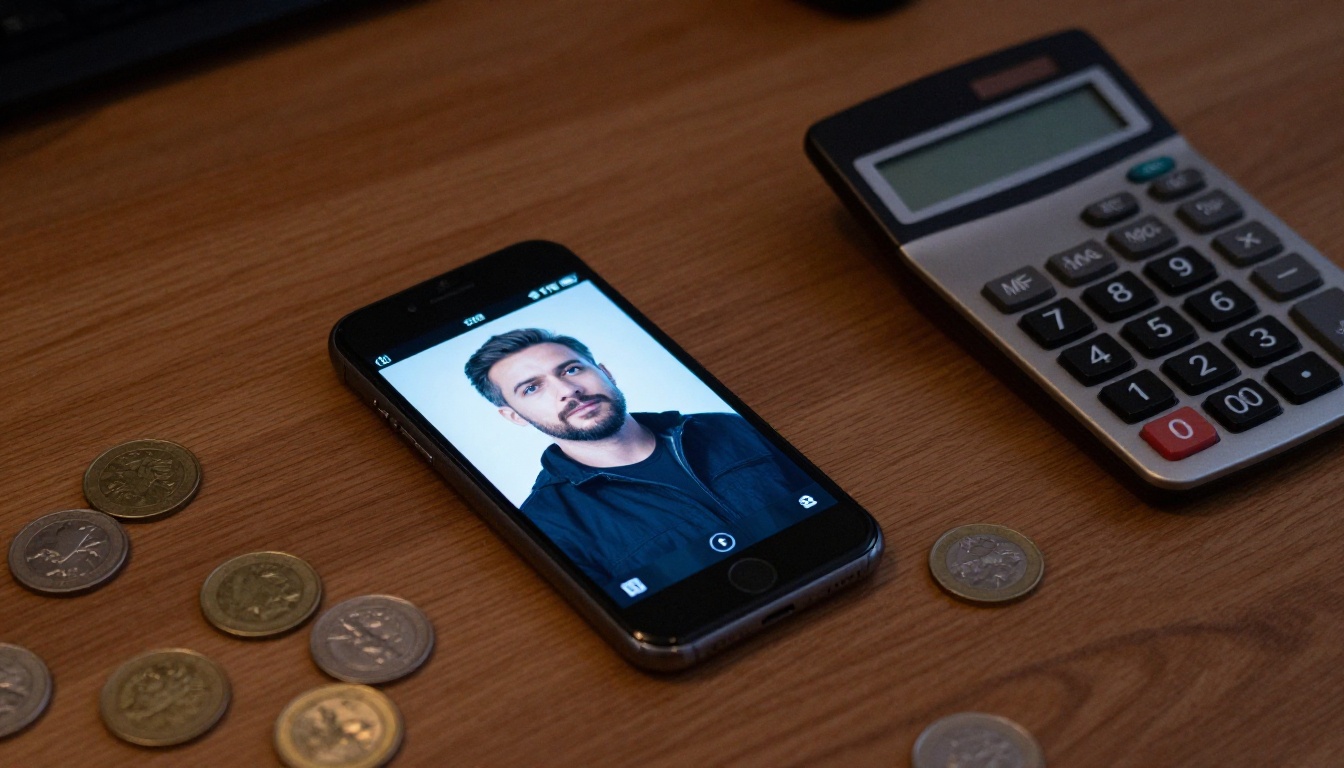
Mark Tilbury’s AI influencer test: the $157 that hides the real work
Verdict: Half-true — works only if you do the unspoken work. The cheap build and quick sales are genuine; the “lazy” framing and the six-figure testimonials at the open are not.
Mark Tilbury’s video “I Tried The LAZIEST Way to Make Money With AI” has racked up more than 465,000 views on a simple premise: build fake AI influencers, post them to Instagram, and sell a digital product — all for under $99 and without showing your face. He gives himself seven days. The honest headline at the finish line is $157 in profit. So is the “laziest side hustle” real? Partly. The parts he glosses over are where the money — and the risk — actually live.
What the video actually claims
The video opens with a montage of eye-watering numbers pulled from other creators: “$100,000 in the last 30 days,” “$200,000 profit,” “over $13,000.” Tilbury, to his credit, plays skeptic. He sets three rules for himself: spend under $99, use no real face or voice, and launch his first AI character before the day is out.
His workflow is genuinely lean. He uses Claude on the free plan to invent three characters — a 101-year-old health guru named Amos, a “bougie boss grandma” in the wealth niche, and a 22-year-old named Sienna for relationships. He generates the images and talking-head videos with Higgsfield (he buys the $99 Ultra plan), writes scripts using downloadable “Claude skills,” adds captions in a free app, and posts ten videos to each Instagram account. After a few days he crowns Amos the winner, has Claude build a $15.99 “30-day challenge” workbook, and sells it through a Stan Store free trial.
The final tally he shows on screen: 23 sales at $12 each for $276 in revenue, minus $99 for Higgsfield and $19.52 in PayPal fees, leaving $157 in profit. He’s upfront that he “failed” his own $1,000 challenge. He also flags, more than once, that he’s uneasy about the ethics.
What the method actually requires
Here’s the first gap. That $157 came from one product, one influencer, one platform, over seven days — and Tilbury frames it as a floor you’d blow past “without really lifting a finger.” Distribution is where that assumption breaks.
Getting views on a brand-new account is not passive. Tilbury posted 30 videos across three accounts in a week, and even he admits the winner emerged partly by luck — the grandma account he abandoned later went viral with 250,000 views after he’d stopped posting. That’s the real shape of this game: most posts do little, and a small number of viral outliers carry the month. Independent affiliate data tells the same story. On TikTok Shop, most videos generate just $10 to $200 in commissions, and viral hits account for 50% to 80% of a creator’s monthly total. You don’t get to that consistency by uploading once and walking away.
Then there’s the cost he waves off. The $99 Higgsfield Ultra plan Tilbury used isn’t a one-time fee — it’s a subscription, and the annual-billed $99/month rate jumps to roughly $129/month if you pay month to month. Claude’s free tier throttled him (“I did have to wait a bit for the credits to refresh”); at any real posting volume you’re paying for a subscription there too. Stan Store’s free trial runs 14 days before it starts billing. Run this for three months at volume and your “under $99” build is a recurring bill, not a sunk cost.
And the legal exposure barely gets a mention. This matters most for U.S. readers, but the principle travels. Tilbury’s health character, Amos, dispenses longevity advice and — in the concept he copied from a rival account — the archetype promotes supplements. The FTC’s Disclosures 101 guidance requires any endorsement with a material connection to a brand to be disclosed clearly, and a virtual character can’t have “tried” a product it’s paid to sell. Worse, the FTC’s final rule banning fake reviews and testimonials, in effect since October 2024, explicitly covers testimonials that misrepresent being written by “someone who does not exist, such as AI-generated fake reviews.” Civil penalties run up to $53,088 per violation. Tilbury adding “your AI grandpa” to a bio is a decent instinct — it may not be enough once that character is selling something.
Is “lazy” the right word for this?
No — and the video quietly admits it. Tilbury spent a full, exhausting day just building the three characters, then more days shooting B-roll, generating voices, editing captions, launching accounts, and reading through the workbook to strip out “any hints of AI slop.” That’s a content production job compressed into a week. The AI removes the hard part of making a face and a script. It does nothing about the part that actually earns: posting consistently, reading what lands, and doing it again next week. The tools are lazy. The business isn’t.
Who actually wins this game
The people clearing real money here are not first-timers who watched one tutorial. They fall into familiar buckets: operators running many accounts at once so a viral outlier is statistically likely, creators who already understand short-form pacing and hooks, and early movers who built audiences before the niche got crowded. CNBC has documented the ceiling — AI-driven virtual personalities pulling in millions, and a Chinese AI-avatar livestream that reportedly moved more than $7 million in seven hours. Those are the “$100,000 in 30 days” clips at the top of Tilbury’s own video. They’re real events. They are not what a beginner’s third week looks like, any more than a lottery winner’s check describes the average ticket.
Lil Miquela, the 2-million-follower character Tilbury studies, reportedly commands six-figure brand deals and roughly $6,000–$10,000 per sponsored post. She’s also a CGI persona built by a studio once valued at $125 million, with years of head start. That’s the top of the distribution, not the entry point.
What you’d realistically earn
Strip out the hype and the numbers get sober. Across the market, most AI influencer accounts earn somewhere between $0 and $500 a month in their first year, with a minority of consistently active accounts reaching four figures monthly. Tilbury’s $157 in a week is actually a decent outcome — but it’s a launch spike off a novelty push and a YouTube audience watching him do it, not a steady run rate.
A fairer projection for someone starting cold: expect close to nothing for the first couple of months while you learn what posts land, then maybe $100–$800 a month if you keep publishing several videos a week and add affiliate links or a digital product. Reaching the $3,000-plus range that mid-tier operators report typically means running multiple characters, diversifying to TikTok and YouTube (Tilbury himself calls skipping TikTok “probably a mistake”), and treating it as a media business. Compare that to the “$100,000/month” framing the video opens with, and the distance is the whole story. If you want a grounded map of where AI genuinely pays, our breakdown of proven ways to make money with AI without experience and simple AI digital products people are actually selling both start from realistic numbers.
Who this is (and isn’t) for
This makes sense if you can commit five to ten hours a week for at least three months, you’re comfortable on camera-free short-form video, you can absorb roughly $100–$150/month in tool subscriptions before you profit, and you’re willing to disclose the AI clearly and stay well away from health or financial claims that invite regulators. It does not make sense if you’re expecting passive income, you can’t post consistently, or the plan depends on a character quietly convincing people it’s a real human. That last version isn’t a side hustle. It’s the thing the FTC’s fake-testimonial rule was written to catch.
What to remember
Tilbury’s video is more honest than most in its genre — he shows a real, modest $157 and admits he failed his own bet. The half-truth is in the framing around that number: “lazy,” “without lifting a finger,” and a highlight reel of six-figure claims that belong to studios and multi-account operators, not to a beginner’s first week. The cheap build is real. The quick first sale is real. The steady income requires marketing you’ll actually do yourself, subscriptions that keep billing, and disclosure discipline the video treats as an afterthought.
Sources
- FTC. “Disclosures 101 for Social Media Influencers.” 2023. https://www.ftc.gov/business-guidance/resources/disclosures-101-social-media-influencers
- FTC. “Federal Trade Commission Announces Final Rule Banning Fake Reviews and Testimonials.” 2024. https://www.ftc.gov/news-events/news/press-releases/2024/08/federal-trade-commission-announces-final-rule-banning-fake-reviews-testimonials
- CNBC. “AI-powered VTubers are earning millions with fully virtual personalities.” 2025. https://www.cnbc.com/2025/07/02/ai-virtual-personality-youtubers-or-vtubers-are-earning-millions.html
- Video: I Tried The LAZIEST Way to Make Money With AI
- Channel: Mark Tilbury
- Views at review: 465,199
- Watch on YouTube: https://youtube.com/watch?v=LlhTEttKcwQ
- Views and other figures may have changed since publication.