Other Income Ideas Half-true — works only if you do the unspoken work
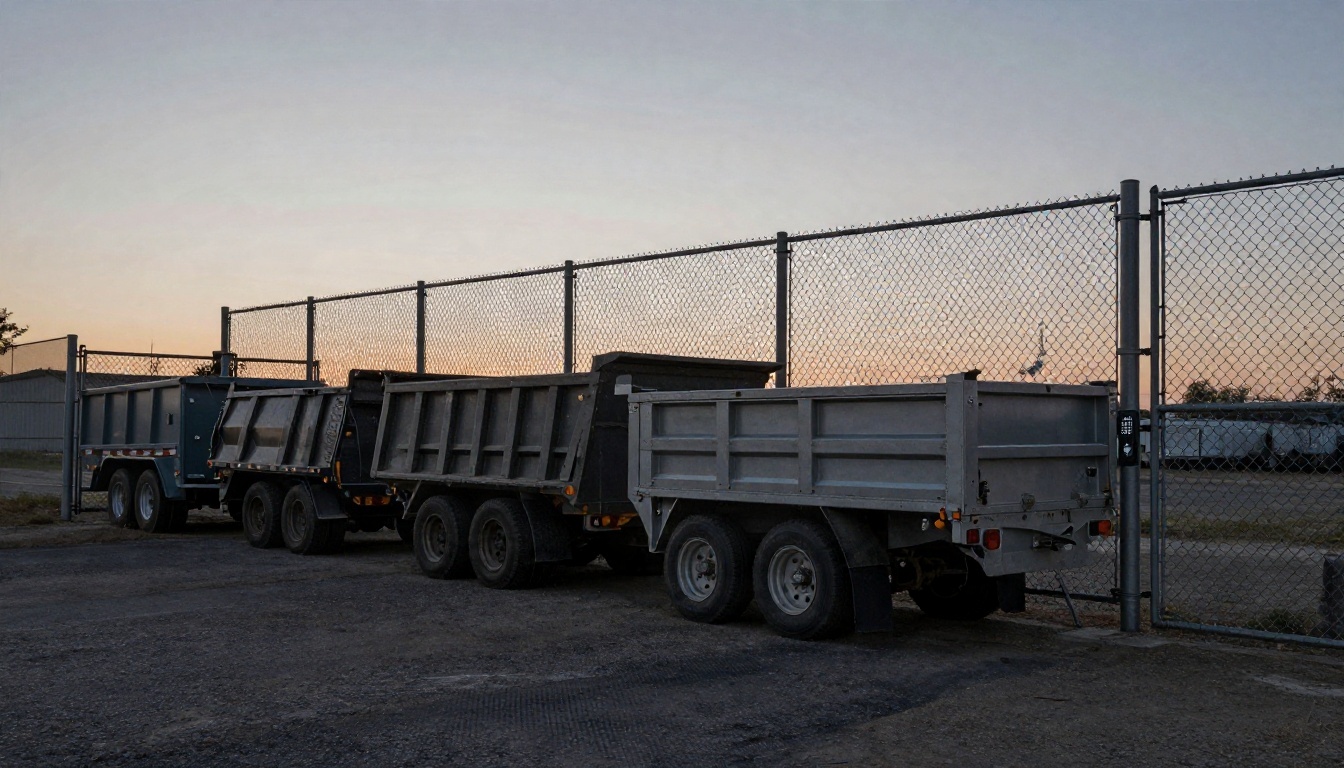
The $9,400-a-month trailer rental in POV Wealth’s viral story, checked
Verdict: Half-true — works only if you do the unspoken work. The business model is real; the number is the finish line of a two-decade race the video compresses into a Monday-to-Friday revenge fantasy.
POV Wealth’s “POV: Your Boss Banned Side Hustles” has pulled in more than 170,000 views with a satisfying setup: a tightfisted new manager bans outside work, not knowing the lead mechanic’s weekend trailer-rental business clears $9,400 a month — more than the day job pays. It’s a well-told piece of fiction (the narrator says so at the end). But it’s selling a real income method underneath the drama, and the method deserves a straight look. So does trailer rental actually pay like that? Yes — eventually, for a very specific person who did a lot the story barely pauses on.
What the video actually claims
The hero is a 16-year equipment mechanic at a grounds-maintenance yard. Twenty years earlier, broke with $178 in checking, he borrowed a neighbor’s trailer, earned $60 hauling a fallen limb, and absorbed a single idea: let the steel work the weekend. Two years later he paid $3,550 cash for a used dump trailer and rented it to homeowners on Saturdays. Every rental dollar went into a separate account until it bought the next trailer. He never financed one.
By the story’s present day he owns eight dump trailers, four equipment trailers, and two mini excavators — all paid for in cash — operating quietly as “Blue Gate Rentals.” The fleet “clears $9,400 a month after every cost.” There’s also a $413,000 index fund, roughly $338,000 of it his own contributions. The video is unusually candid about the plumbing: it mentions self-employment tax as “a real line on your return,” notes that depreciation lowers his taxes while he still sets cash aside to replace the trailers, and references the U.S. Bureau of Labor Statistics figure that a bit over 5% of American workers hold more than one job.
That BLS number checks out. The latest Table A-16 from the BLS puts multiple jobholders at 5.5% of the employed — about 9 million people — in October 2026. The video’s framing of them (“most of them aren’t getting rich; they are paying a bill or building a floor”) is honest. That’s rarer than the headline suggests.
What the method actually requires
Here’s the part the drama rushes past. The $9,400 is net of an 18-year compounding runway, zero financing, and — the quiet lever — a professional mechanic who never paid anyone to fix a machine.
Start with utilization, because that’s the real engine of any rental business. Industry operators generally treat 50–70% utilization (roughly 15–21 rented days a month) as healthy, and a single dump trailer renting 15 days a month at $120–$300/day grosses $1,800–$4,500 before costs. Strip out insurance, repairs, lot rent, booking software, and the replacement reserve, and a well-run single trailer tends to net somewhere around $1,200–$1,800 a month. Stack enough of those and $9,400 is arithmetic, not magic. But every one of those trailers had to be bought, kept booked, and kept running.
Keeping them running is where the story quietly cheats the comparison in the hero’s favor. He’s a mechanic. He does every repair himself, so his largest variable cost is labor he doesn’t pay for. When a renter rolled an excavator off a ramp, insurance covered it after a $3,750 deductible, but the machine sat idle for three weeks and “those bookings never came back.” Downtime is the silent tax on equipment rental, and it hits hardest exactly when a machine is damaged and earning nothing.
Then there’s the tax the narrator does name. Self-employment income isn’t taxed like a paycheck. The IRS self-employment tax runs 15.3% — 12.4% Social Security on the first $184,500 of net earnings in 2026, plus 2.9% Medicare with no cap — and it lands on top of regular income tax. That’s the line between “the fleet clears $9,400” and what reaches your household, and most napkin-math side-hustle pitches skip it entirely. This one at least nods at it.
And the capital. The story’s whole moral is “never financed a single one.” That’s a legitimate strategy — it’s also slow. The alternative route most people actually take runs through debt: the SBA’s 504 program exists specifically to finance long-life machinery and equipment, and plenty of real trailer operators lever up to buy a fleet in year one instead of year ten. Faster, yes. Also far riskier when a season goes soft and the payments don’t care how busy you are.
Who actually wins this game
Equipment rental rewards a profile, not a mood. The people who make it work tend to share three traits the hero happens to have all of: mechanical skill (so repairs and downtime don’t eat the margin), access to a cheap secure lot (he leases a fenced yard with a keypad), and a feeder market of repeat demand (contractors and homeowners who need to haul).
Notice who his best customer turns out to be — the company that employs him, which has rented from Blue Gate for three years and paid $93,600 without reading the vendor line. That’s not luck dressed as irony. It’s the real pattern: the operators who thrive already sit inside the industry they rent to. They know who needs a dump trailer in April, they can fix it when it breaks, and they built their booking reputation (“the trailers came back cleaner than we sent them”) over years, not weekends.
What you’d realistically earn
Set the fantasy against the baseline. According to CNBC’s reporting on Bankrate’s survey, the average U.S. side hustle brings in about $891 a month — and the median is closer to $250, because a handful of high earners drag the average up. Roughly 37% of side hustlers make $100 or less. The $9,400 figure isn’t a typical side-hustle month. It’s the top of a distribution most people never reach.
For trailer rental specifically, a realistic first year with one or two owned-outright trailers looks more like $0–$1,500 a month of net profit — often near zero while you’re learning utilization and eating early repairs — climbing toward a few thousand a month only after you’ve got multiple units booked consistently and a maintenance routine that keeps downtime low. A three-trailer owner-operator in a mid-size market can plausibly net somewhere in the five figures a year. Reaching $9,400 a month means a sizable fleet, high utilization, and the discipline to pour profit back into steel for years instead of taking it home. The video shows exactly that — it just shows it in a two-minute montage.
Who this is (and isn’t) for
This fits someone who already has mechanical ability, a few thousand dollars of risk capital (one used trailer runs roughly $3,000–$10,000), access to secure parking, 5–10 hours a week for pickups, drop-offs, and maintenance, and the patience to reinvest for years before the income feels passive. It does not fit someone looking for hands-off money this quarter, anyone who’d need to finance the whole fleet to start, or a person with no way to repair a broken machine — because the day a renter damages your only asset, your “passive income” becomes a repair bill and a dead booking calendar. If you can’t fix it and you can’t park it, this isn’t your business yet.
What you’d be signing
One more thing the story gets right, worth repeating because it’s genuinely useful: read the paper before you sign it. The video’s “careful note on the law” — that a few U.S. states (it names California, Colorado, North Dakota) protect lawful off-duty activity, but employers can usually still bar you from competing with them or using company equipment — is a fair, if simplified, summary. He never used a company wrench. That detail isn’t color; it’s the legal difference between a side business and a fireable offense. Check your own state, and if you’re outside the U.S., check your local employment law rather than assuming an American rule applies.
What to remember
The method is real and the video is more honest than most — it even cites BLS data and warns about self-employment tax. The catch sits in the compression. “Your weekends pay $9,400 a month” is true in the story only after 18 years of cash-funded reinvestment by a professional mechanic with a captive customer base. Strip any one of those away and the number falls hard. Trailer rental can absolutely build real asset income. Just measure the timeline in years, price in the tax and the downtime, and don’t confuse the last frame of the montage with the first.
For related reality checks on physical-asset income, see our look at the vending-machine business that ended in $1,000,000 of debt and our breakdown of the “machines making people rich in 2026” pitch.
Sources
- U.S. Bureau of Labor Statistics. “Table A-16. Multiple jobholders by sex.” 2026. https://www.bls.gov/news.release/empsit.t16.htm
- IRS. “Self-Employment Tax (Social Security and Medicare Taxes).” 2026. https://www.irs.gov/businesses/small-businesses-self-employed/self-employment-tax-social-security-and-medicare-taxes
- CNBC Make It. “Side hustlers make an average of $891 per month, says new report.” 2024. https://www.cnbc.com/make-it/2024/07/16/side-hustlers-are-making-an-average-of-891-per-month-says-bankrate-report.html
- U.S. Small Business Administration. “504 loans.” 2026. https://www.sba.gov/funding-programs/loans/504-loans
- Video: POV: Your Boss Banned Side Hustles to ‘Keep You Focused’ — He Didn’t Know Yours Pays $9,400 a Month
- Channel: POV Wealth
- Views at review: 170,976
- Views and figures may have changed since this review was published.