AI Side Hustles Half-true — works only if you do the unspoken work
Making viral videos with only Claude AI: the money part the pitch skips
Verdict: Half-true — works only if you do the unspoken work. The production trick is real; the thing that turns it into income is exactly what the video never mentions.
A channel called ReachMora posted a tutorial titled “I Tried Making a Viral Video Using ONLY Claude AI,” and at review it had pulled 236,856 views. The hook: a channel named Ricky Clips has a video with over 31 million views, and you can supposedly clone that animated style using nothing but Claude and a free “skill” file from the description. Can you? The production part is more real than you’d expect. The part where it becomes money is where the video goes quiet.
What the video actually claims
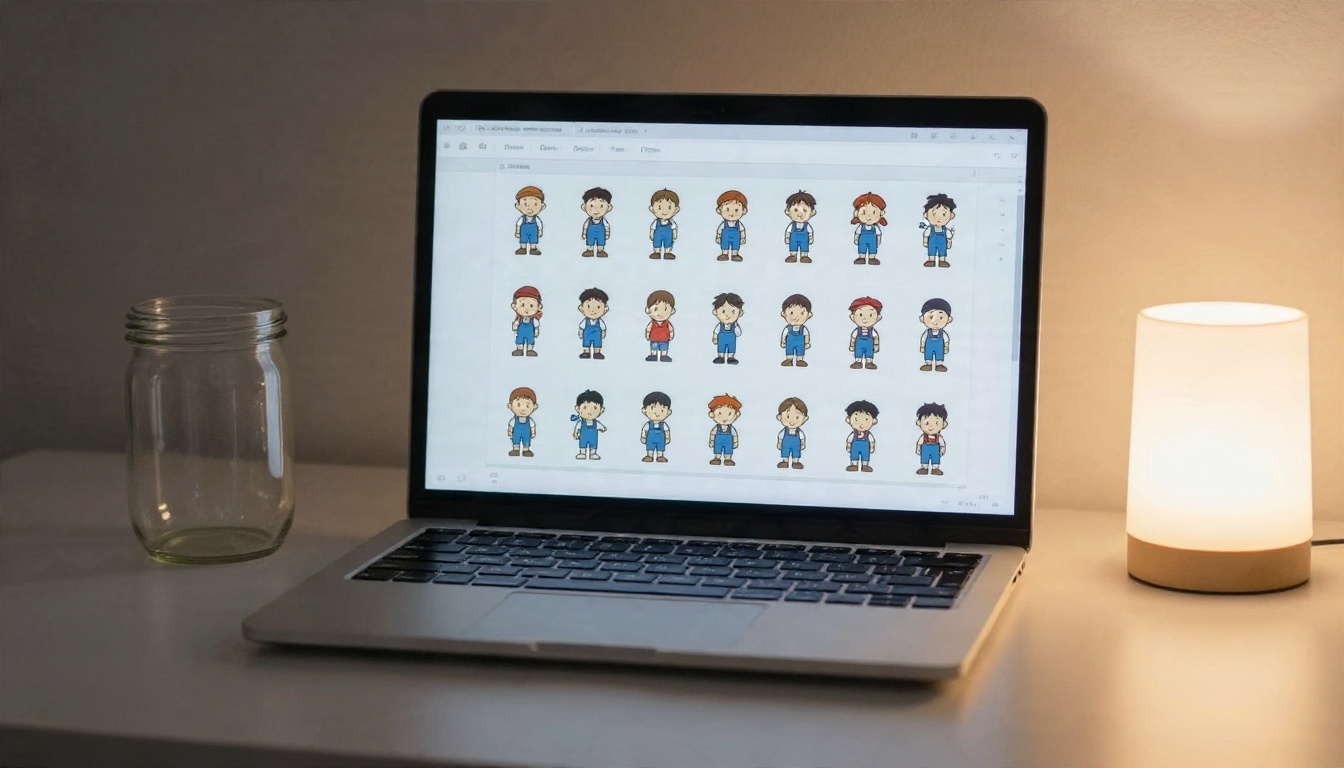
The creator says they found Ricky Clips — 31 million views on one video, 16 million on another, 14 million on an upload that was a day old — and set out to reverse-engineer the format without Blender, without CapCut, “without any video generators.” Their answer is a Claude skill file called “cartoon audio short” that you install under Claude’s Skills menu. From there, Claude allegedly walks you through everything: it offers ten story ideas, writes the voice-over script, and after you paste the script into ElevenLabs for narration and upload the audio back, Claude renders the full animation itself.
The demo produces a roughly 30-second clip about Victor Lustig, the con man who sold the Eiffel Tower twice. The creator says Claude rendered around 1,000 frames and that the whole render took about 30 minutes. No dollar figure is promised anywhere in the video. The implied payoff is the Ricky Clips numbers themselves — millions of views — and the instruction to “repeat this every single day.”
That’s the pitch in one line: one free skill, one daily loop, potentially viral output. Notice what’s doing the heavy lifting there. The word “viral.”
What the method actually requires
Start with the honest part. Claude really can generate and stitch animation frames through code — a skill file can have it write a script that draws frames programmatically and assembles them into an MP4. The output in the demo isn’t fake. So the “Claude does the production” claim survives.
But “ONLY Claude” doesn’t. The workflow the video itself shows routes the voice-over through ElevenLabs, which is a second tool with its own bill. ElevenLabs’ free tier gives you 10,000 credits a month (roughly one character of speech per credit) and paid plans start at $6/month for Starter, then $22 for Creator — and commercial-use terms matter the moment you monetize. Add Claude: the free plan runs on a rolling five-hour usage window, and the creator openly admits you may “run out of credits during the process and have to wait around 5 hours.” A 1,000-frame render is heavy. Claude Pro is $20/month if you want to do this daily without hitting the wall.
Here’s the piece that isn’t in the video at all. A YouTube channel can’t earn ad revenue until it’s accepted into the YouTube Partner Program, and the thresholds are not small:
| Monetization path | What you need |
|---|---|
| Long-form ads | 1,000 subscribers and 4,000 valid public watch hours in 12 months |
| Shorts ads | 1,000 subscribers and 10 million qualified Shorts views in 90 days |
Those figures come straight from YouTube’s own Partner Program page. Watch hours and Shorts views don’t pool together. And the creator flagged in August 2026 that applications from February 1, 2027 will need double — 8,000 watch hours or 20 million Shorts views. So before a single cent arrives, a brand-new channel has to clear a bar that most people posting daily never reach.
Then the rate. Even once you’re in, Shorts pay thin — industry estimates put Shorts revenue somewhere around $0.03 to $0.08 per 1,000 views for U.S. audiences, lower elsewhere. Do the arithmetic: hitting the 10-million-view Shorts gate over 90 days might translate to a few hundred dollars total, not a windfall.
Why daily uploads could get you demonetized
This is the problem the video walks right past. In July 2025, YouTube rewrote its monetization rules, renaming the old “repetitious content” policy to inauthentic content and broadening it. YouTube’s channel monetization policies now say content should “not be mass-produced, generic, repetitive, or manipulative,” and they specifically name “AI-generated content made with generic or unoriginal templates giving the impression of mass production.” Enforcement moved from video-by-video to channel-level, and a first enforcement wave hit in January 2026.
Read that against the video’s own advice: install one skill, generate a story, render, “repeat this every single day.” A channel where every upload comes out of the same template, with superficial variation between stories, is close to the textbook description of what YouTube now refuses to monetize. The tool isn’t the problem — YouTube is explicit that using AI to help script or enhance a video is fine. The problem is the mass-produced, interchangeable pattern the video sells as the whole point.
Who actually wins this game
The channels the video holds up as proof — the ones with 31 and 16 million views — are survivors, not the baseline. For every Ricky Clips there are thousands of faceless animation channels that posted daily for months and got buried. The people who break out tend to have one of a few things the tutorial can’t hand you: a genuinely original editorial voice (a story-selection instinct, a distinctive writing style, a hook that lands), an existing audience to seed the first uploads, or enough volume and testing discipline to find a format before they burn out.
ReachMora themselves are instructive here. They’re a tech channel with an audience already, teaching a workflow — which is a real business. Teaching the shovel is reliably more profitable than the gold rush. That’s not a knock; it’s just a different business than the one the video implies you’re entering.
What you’d realistically earn
The video promises no number, so let’s build one. A disciplined beginner posting animated Shorts daily, with no prior audience, should expect roughly $0 for the first several months — because you earn nothing until you’re admitted to YPP, and clearing 1,000 subscribers plus 10 million Shorts views in a 90-day window from a cold start is uncommon. If you do get in and your content survives the inauthenticity review, Shorts ad revenue at those RPMs plausibly lands in the low hundreds of dollars a month, not thousands, unless you break out. The realistic early-stage range is closer to $0–$200/month, with real upside reserved for the small fraction who develop something distinctive.
Compare that to the vibe of “31 million views, repeat every day.” The gap between those two pictures is the entire article.
Who this is (and isn’t) for
This makes sense for someone who already enjoys storytelling and wants AI to collapse the production time — a person with maybe 5–10 hours a week, a tolerance for posting into the void for months, and the creative instinct to make each video genuinely different. The ~$26–$40/month in tool costs (Claude Pro plus an ElevenLabs tier) is affordable as a hobby-to-maybe-income bet. It is not for someone expecting hands-off, same-template daily output to turn into passive money. That specific plan now runs straight into YouTube’s enforcement, and even without it, the economics don’t clear a part-time wage anytime soon.
What to remember
The production hack is legitimate and the tutorial is a fair demo of it. What’s missing is everything between “I rendered a video” and “I got paid”: the Partner Program thresholds, the thin Shorts payouts, the tool bills, and — most importantly — YouTube’s 2025 rule that treats mass-produced, templated AI output as unmonetizable. Treat it as a faster way to make videos you still have to make genuinely good. Not a money button. The FTC has already acted against operators who sold “AI will make you money online” as a shortcut, so U.S. readers in particular should keep a skeptical ear for any version of this pitch that does name a guaranteed number. For more on where these automated-content claims hold up and where they don’t, see our breakdowns of one YouTube channel’s AI earnings claim and whether AI can really run a whole content business.
Sources
- YouTube Help (Google). “YouTube Partner Program overview & eligibility.” 2026. https://support.google.com/youtube/answer/72851
- YouTube Help (Google). “YouTube channel monetization policies.” 2026. https://support.google.com/youtube/answer/1311392
- FTC. “FTC Announces Crackdown on Deceptive AI Claims and Schemes.” 2024. https://www.ftc.gov/news-events/news/press-releases/2024/09/ftc-announces-crackdown-deceptive-ai-claims-schemes
- Video: I Tried Making a Viral Video Using ONLY Claude AI
- Channel: ReachMora
- Views at review: 236,856
- Watch on YouTube: https://youtube.com/watch?v=kDcxEIDC5NA
- View counts and platform figures may have changed since publication.