Investing & Dividends Half-true — works only if you do the unspoken work
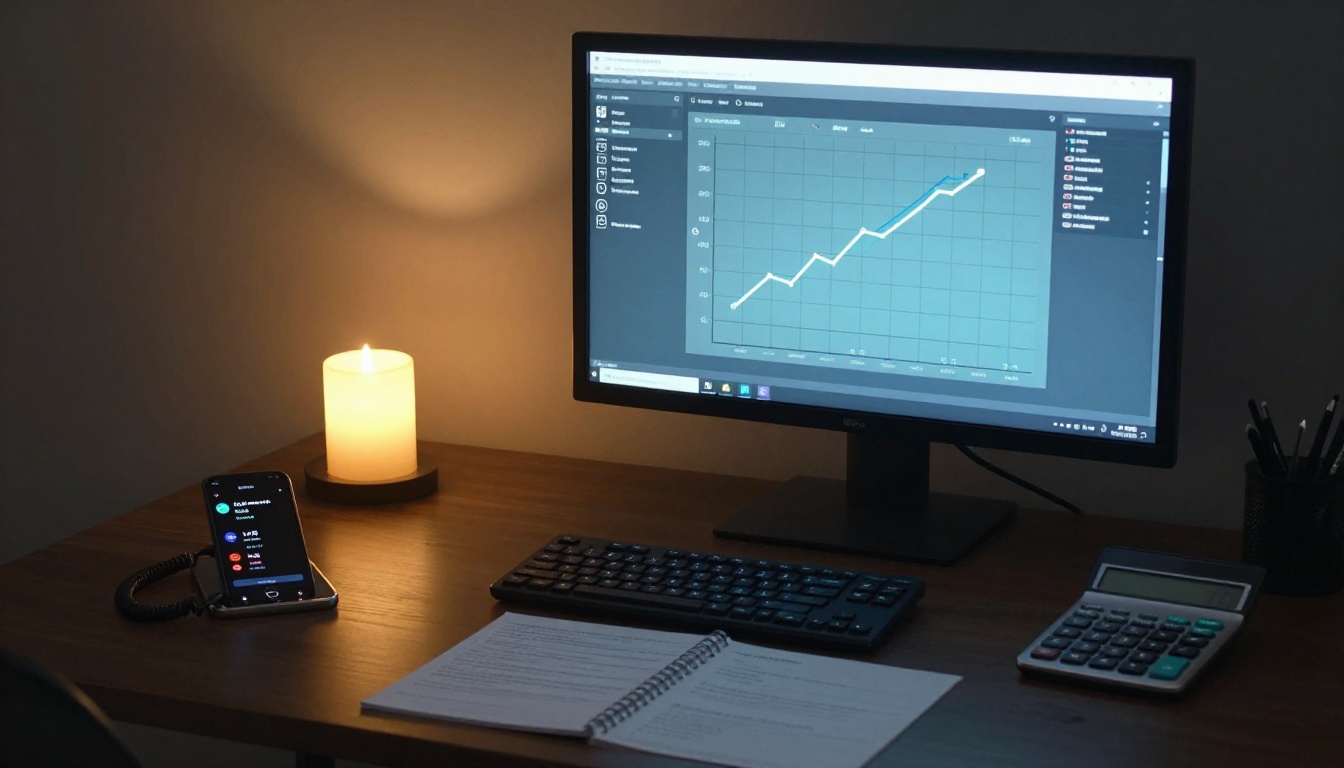
The Claude + TradingView trading system: real automation, missing edge
Verdict: Half-true — works only if you do the unspoken work. The AI builds the scanners, the backtests and the alerts; it can’t build the trading edge that the backtests make look easy.
Humbled Trader’s video “I Built an AI Trading System With Claude + TradingView” has pulled nearly 195,000 views by walking through a full morning trading pipeline — a pre-market gap scanner, a strategy filter, automated backtests, and phone alerts — all stitched together with Claude Code. The creator is a full-time trader with more than ten years behind her, and to her credit she says it out loud: “AI won’t magically make you profitable.” So is the system real? The plumbing is. The profits on screen are backtests, not a track record, and that gap is the entire story.
What the video actually claims
The pitch here isn’t a dollar number. It’s a workflow. The creator connects the TradingView desktop app to Claude Code through an MCP integration (an open-source project she credits with around 2,900 GitHub stars), then has Claude read her charts, draw levels, and build two scanners. “Scanner A” pulls the day’s top pre-market gappers from Yahoo Finance with news catalysts from Benzinga. “Scanner B” filters those names against her “trend join long” entry rules. Claude then writes a Pine Script strategy, backtests it on TradingView, rewrites it in Python to test more tickers, schedules both scanners to fire on a timer, and pipes the results to Telegram every morning.
The closest thing to an income claim lives in the backtests. On a single ticker (MU), the creator shows 14 trades, a $1,200 net profit, and a profit factor of 2.48 — “really good,” she says. A later Python backtest across 32 stocks on her watch list over 30 days, on a $10,000 account, shows a 54% win rate and a positive total. She caveats nearly all of it: “this is just a backtest,” “AMD has been really really strong,” “we’re using very limited samples,” and at one point, “I should have just bought and hold.” She also flags that Pine Script “doesn’t allow you to turn that Pine Script into an automated trading system” — live execution, she says, is a separate project she’s running through the Interactive Brokers API in a future video.
Give her this much: she is not selling a money-printer. She’s selling a research and automation stack, and she repeats that you still need to know how to trade.
What the method actually requires
Start with the part that’s genuinely true. Claude Code really can read a TradingView chart through MCP, draw levels, generate a Pine Script strategy, and run a backtest. The automation is real and reproducible — anyone with the two subscriptions and a free afternoon can rebuild it. The scanners and the Telegram alerts work.
Now the costs, because “free blog with all the prompts” hides a recurring bill. You need a paid Claude plan and a paid TradingView plan, plus a brokerage for any real trade.
| Tool | Plan | Cost (as of June 2026) |
|---|---|---|
| TradingView | Essential (minimum for this) | about €12.95–$15/month (pricing) |
| Claude | Pro (minimum) | $20/month (pricing) |
| Claude | Max 5x (what the creator uses) | $100/month |
| Brokerage | Interactive Brokers (live execution) | per-trade commissions + data |
Run it the way the video does — TradingView Essential plus Claude Max — and you’re at roughly $115/month, or about $1,400 a year, before a single trade clears. That’s the easy 10% of trading. The hard 90% is having an entry that makes money after fees, slippage and your own nerves, and the backtest is where that 90% quietly disappears.
Backtests overstate live results, and they overstate them the most when the strategy looks cleanest. The creator’s demo tests a “join the strength” breakout on the Magnificent Seven and a hand-picked watch list during one of the strongest large-cap runs in recent memory. A momentum strategy will look brilliant on AMD and Nvidia in an uptrend — that’s not an edge, that’s the weather. Strip out commissions, the bid-ask spread, and the fills you won’t actually get at the price the backtest assumes, and well-built strategies routinely shed a chunk of their paper returns when they meet a live market. A 2.48 profit factor on 14 trades of one ticker is a sample size, not a system.
So who actually makes money with this?
People who were already profitable traders.
The creator can use Claude to compress an hour of manual scanning into two minutes because she already knows what a valid setup looks like and which results to throw away. The tool sharpens an edge she spent a decade building. That’s the honest version of her own line — AI is a force multiplier on expertise, and a force multiplier on zero is still zero.
The regulators who track this have the numbers, and they’re brutal. SEBI’s July 2024 study found that 7 out of 10 individual intraday traders in India’s equity cash segment lose money — and that’s plain stock day trading, the same activity the video automates. Move to leveraged products and it gets worse. Europe’s regulator found that 74–89% of retail CFD accounts lose money, with average losses running from €1,600 to €29,000 per client. In the U.K., the FCA capped leverage at 30:1 down to 2:1 precisely because “high proportions of consumers” were losing on these products. A faster scanner doesn’t move you out of that majority.
What you’d realistically earn
Here’s the part the rosy backtest skips. For most beginners, year one of discretionary day trading is net negative after costs — the tooling subscriptions, brokerage commissions, and the trades that go wrong while you’re learning. The SEBI derivatives data makes the point at scale: the regulator’s FY25 study reported that about 91% of individual traders lost money in India’s equity derivatives segment, with net losses of ₹1,05,603 crore (~$12 billion) across millions of accounts. The minority who clear a profit tend to be experienced, well-capitalized, and selective — exactly the profile of the person presenting this video.
A U.S.-specific note: the old $25,000 pattern-day-trader minimum that governed margin day trading was scrapped on June 4, 2026, when the SEC approved FINRA’s change to Rule 4210 (the floor drops toward the standard $2,000 margin minimum). That lowers the cost of entry. It does not change the odds — it just lets more people find out the hard way with less capital.
So the realistic range is uncomfortable: most people who copy this exact setup will spend roughly $1,400 a year on tools and finish their first year down, not up. A genuinely skilled trader who already makes money can use the same stack to save hours a week and tighten execution. The system’s value is in the time it gives an expert back, not in an income it generates for a beginner.
Who this is (and isn’t) for
This makes sense if you already trade with a documented, tested edge, you have the capital to absorb a learning-curve drawdown, and you want to automate the repetitive scanning and alerting you’re doing by hand. It’s a real productivity upgrade for that person — and the recreations of similar ideas, like recreating a quant strategy with Claude Code or running a Claude AI trading bot for 20 hours, land in the same place. It is not for someone who hopes the AI will supply the edge. If you can’t explain why your strategy makes money without the word “AI” in the sentence, automating it just helps you lose faster.
What to remember
The video is honest in its framing and impressive in its execution, which is exactly why it’s persuasive. The automation is real, the costs are modest, and the prompts work. What gets glossed over is that a backtest on a hand-picked watch list during a bull run is not evidence of a profitable system, and that being a consistently profitable trader — the prerequisite the creator names but doesn’t dwell on — is the rare, hard part the regulators keep quantifying. Half-true: the tool does what she shows. The money does not follow automatically.
Sources
- ESMA. “ESMA agrees to prohibit binary options and restrict CFDs to protect retail investors.” 2018. https://www.esma.europa.eu/press-news/esma-news/esma-agrees-prohibit-binary-options-and-restrict-cfds-protect-retail-investors
- FCA. “FCA confirms permanent restrictions on the sale of CFDs and CFD-like options to retail consumers.” 2019. https://www.fca.org.uk/news/press-releases/fca-confirms-permanent-restrictions-sale-cfds-and-cfd-options-retail-consumers
- SEBI. “SEBI study finds that 7 out of 10 individual intraday traders in equity cash segment make losses.” 2024. https://www.sebi.gov.in/media-and-notifications/press-releases/jul-2024/sebi-study-finds-that-7-out-of-10-individual-intraday-traders-in-equity-cash-segment-make-losses_84948.html
- Anthropic. “Claude plans and pricing.” 2026. https://claude.com/pricing
- TradingView. “TradingView pricing.” 2026. https://www.tradingview.com/pricing/
- Video: I Built an AI Trading System With Claude + TradingView
- Channel: Humbled Trader
- Views at review: 194,906
- Watch on YouTube: https://youtube.com/watch?v=IqvnryFzZD4
- Views and figures are accurate as of the review date and may have changed since publication.