YouTube Monetization Half-true — works only if you do the unspoken work
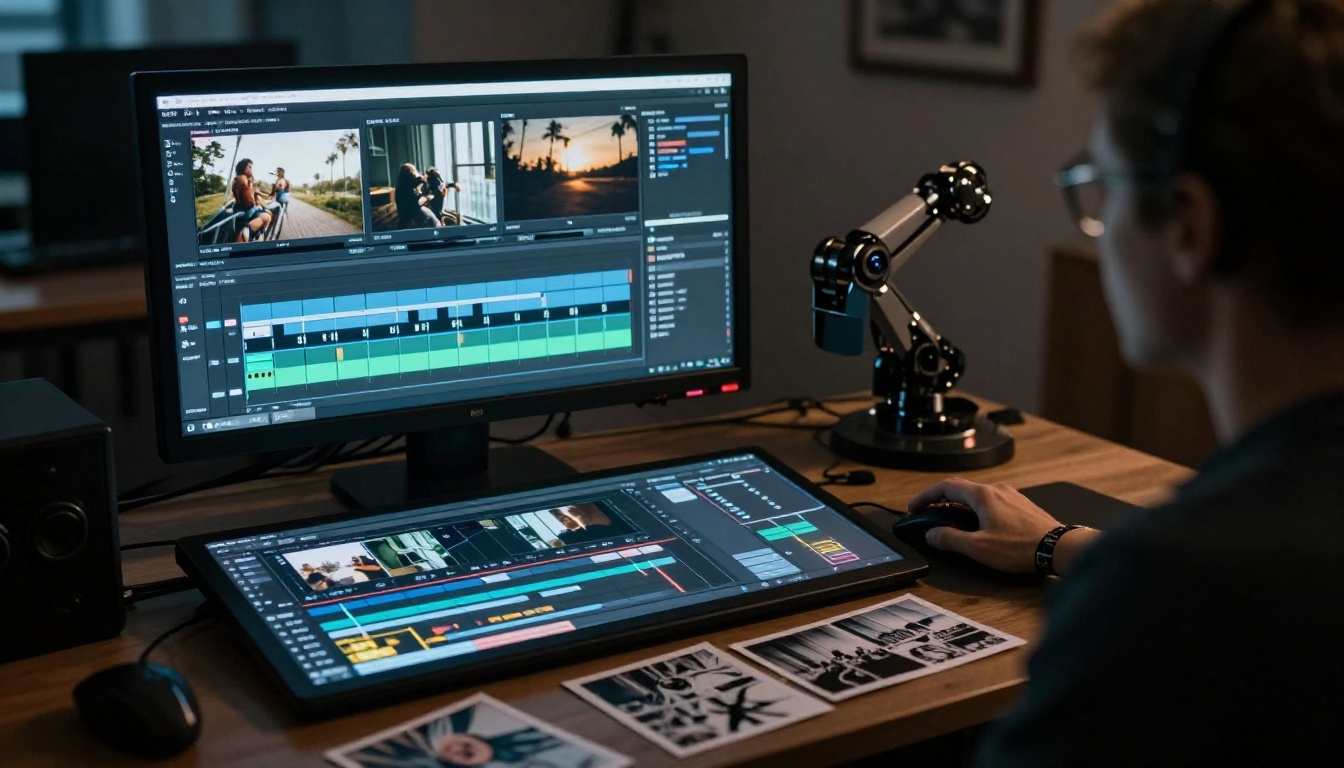
GPT-6 Astra made a whole YouTube video — but can it make you money?
Verdict: Half-true — works only if you do the unspoken work. The AI really did produce the video; a finished file is not the same thing as a channel that pays you.
Nate Herk’s clip “GPT-6 Astra Made This Entire Video” opens with an AI narrator announcing that it — not Nate — planned, researched, gathered the footage, edited, and rendered the whole thing. The pitch lands because it’s largely true. Herk says the job took roughly 50 minutes and would have cost about $60 on API billing. What the video never quite says out loud is the part that actually determines whether any of this turns into income. That’s the story.
What the video actually claims
The framing is a demonstration, not a course. An AI presenter (HeyGen’s Avatar V5 driving a clone of Herk’s face, with an ElevenLabs voice clone) walks through how it took one loose prompt and produced a finished, postable video about OpenAI’s new GPT-6 Astra release. It cites real builders — a Manhattan world in Unreal Engine, a Call of Duty-style shooter, a Minecraft clone, a train model with 3,000-plus editable objects in Blender — as examples of what people are making with the model.
Herk’s prompt, which he shows on screen, is deliberately open-ended: take me from idea to finished YouTube video, use my voice clone and avatar, make it look human-edited in HyperFrames, and “do not give me a draft or a POC.” He then says he got out of the way.
On cost, he’s specific and refreshingly honest. He’s been “blowing through this limit like crazy” on his ChatGPT subscription, has burned two of the resets OpenAI granted, and estimates the same job at about $60 if billed through the API. GPT-6 Astra is real: OpenAI rolled it out on September 3, 2026, with “computer use” and longer autonomous tasks as headline features, and CNBC reported API pricing of $10 per million input tokens and $50 per million output. So the production claim checks out. The question is what happens after “render.”
What the method actually requires
Making a video and running a YouTube business are different jobs, and the demo only shows the first one.
Start with the recurring cost, because “$60” was for a single 50-minute run on fast mode. The tools in the workflow aren’t free either. HeyGen’s paid plans run $29/month (Creator), $49/month (Pro), and $149/month (Business), with Avatar video burning roughly 20 credits per minute — the $29 tier’s 200 monthly credits cover only about 10 minutes of avatar footage before you buy more. Add ElevenLabs for voice, plus your ChatGPT or API spend, and a person publishing weekly is looking at a real monthly software bill, not a one-time $60.
Now the harder part. A video sitting in your export folder earns nothing. To make money on YouTube you have to get into the Partner Program, and YouTube’s own eligibility page sets the bar at 1,000 subscribers plus 4,000 qualified public watch hours in the last 12 months (or 1,000 subscribers and 10 million Shorts views in 90 days). Those thresholds get harder soon: for new applicants starting February 1, 2027, the watch-hour requirement doubles to 8,000 hours. None of that is production. It’s distribution — thumbnails, titles, an audience, and enough watch time to clear the gate.
Here’s the piece that should stop anyone planning to spin up an AI content farm.
YouTube spent 2025 tightening the screws on exactly this kind of output. In July 2025 it renamed its “repetitious content” policy to “inauthentic content,” clarifying that its monetization rules target mass-produced and templated videos made with little human input — what people call AI slop. Enforcement moved to channel-level detection, and in January 2026 YouTube terminated a single wave of 16 channels that had collectively pulled 4.7 billion views. AI-assisted video is still monetizable, but only when you add disclosed, genuine human value: your own commentary, analysis, or editing judgment. A channel that just points an autonomous model at a topic and hits publish is the exact profile the policy was written to catch.
| What the demo shows | What it costs to run monthly |
|---|---|
| One 50-min autonomous run | ~$60 (API, fast mode, one video) |
| HeyGen avatar | $29–$149/mo, ~20 credits/min |
| ElevenLabs voice + ChatGPT/API | Additional subscription + usage |
| Getting monetized | 1,000 subs + 4,000 watch hours (not a cost — a distribution problem) |
Who actually wins this game?
Herk himself is the answer. He runs an established AI-automation channel with a built-in audience, a face and voice worth cloning, and — crucially — the editorial judgment to write a sharp prompt and know whether the output is any good. When he posts an AI-made video, it lands on subscribers who already trust him and gets human framing around it. That’s not the model doing the work. That’s a creator using the model as a tool inside a business he already built.
The people who succeed with AI video in 2026 tend to fall into a few buckets: creators with an existing audience, operators with a paid-traffic budget to buy the views organic reach won’t hand them, and specialists who use AI to produce faster in a niche they already understand. A beginner with no channel, no audience, and a plan to let the AI “do it all” is missing every one of those advantages — and is the most exposed to demonetization.
What you’d realistically earn
The video never promises a dollar figure, which is to its credit. But the implied promise — AI makes the video, so you can run a channel — deserves a number anyway.
For a brand-new channel, the honest first-year range is often $0. Not because the AI can’t produce, but because you haven’t cleared the Partner Program threshold, and because AI-only uploads risk never getting there under the inauthentic-content rules. Once monetized, YouTube pays roughly $1–$5 per 1,000 monetized views in most niches, meaning even 100,000 monthly views is a few hundred dollars before your software costs. Compare that to a $29–$149 HeyGen bill plus API spend, and the first months are frequently net-negative. The upside is real for people who break through — but it arrives after the audience, not before it.
Who this is (and isn’t) for
This workflow makes sense if you already have a channel or a client base and want to cut production time from days to under an hour — you bring the audience and the judgment, the AI brings the speed. It also fits agencies and marketers producing disclosed, human-directed content at volume. It does not make sense as a hands-off income plan for someone starting from zero, with no audience, hoping the model replaces the marketing, the niche expertise, and the watch-hours grind. If your plan is “AI posts, I collect,” the platform’s own policy is aimed squarely at you.
One more caution for U.S. readers: the FTC has been active here. Its Operation AI Comply sweep and a proposed Earnings Claim Rule target sellers who promise easy AI income without substantiation. Herk isn’t selling that — but plenty of copycats will, and the regulator is watching.
For more on where AI genuinely helps a content business (and where it doesn’t), see our breakdowns of building a faceless YouTube channel with full automation and whether AI can run your entire content business.
What to remember
The demo is legitimate. GPT-6 Astra can take a loose prompt and hand back a finished, professional-looking video, and Herk is upfront about the cost and the tools. But production was never the bottleneck for a YouTube income. Distribution is, and YouTube’s inauthentic-content policy now actively works against the “AI does everything” version of this dream. The tech is real. The paycheck depends on the work the video doesn’t show.
Sources
- CNBC. “OpenAI announces rollout of GPT-6 Astra model.” 2026. https://www.cnbc.com/2026/09/03/open-ai-astra-gpt-6-cyber.html
- YouTube Help. “YouTube Partner Program overview & eligibility.” 2026. https://support.google.com/youtube/answer/72851
- YouTube Help. “YouTube channel monetization policies.” 2026. https://support.google.com/youtube/answer/1311392
- FTC. “Operation AI Comply: continuing the crackdown on overpromises and AI-related lies.” 2024. https://www.ftc.gov/business-guidance/blog/2024/09/operation-ai-comply-continuing-crackdown-overpromises-ai-related-lies
- FTC. “FTC Proposes Rule Changes and New Rule to Deter Deceptive Earnings Claims.” 2025. https://www.ftc.gov/news-events/news/press-releases/2025/01/ftc-proposes-rule-changes-new-rule-deter-deceptive-earnings-claims-multilevel-marketers-money-making
- Video: GPT-6 Astra Made This Entire Video
- Channel: Nate Herk | AI Automation
- Views at review: 388,003
- Watch on YouTube: https://youtube.com/watch?v=dT5-x3u5nCg
- Views and other numbers may have changed since this review was published.