AI Side Hustles Half-true — works only if you do the unspoken work
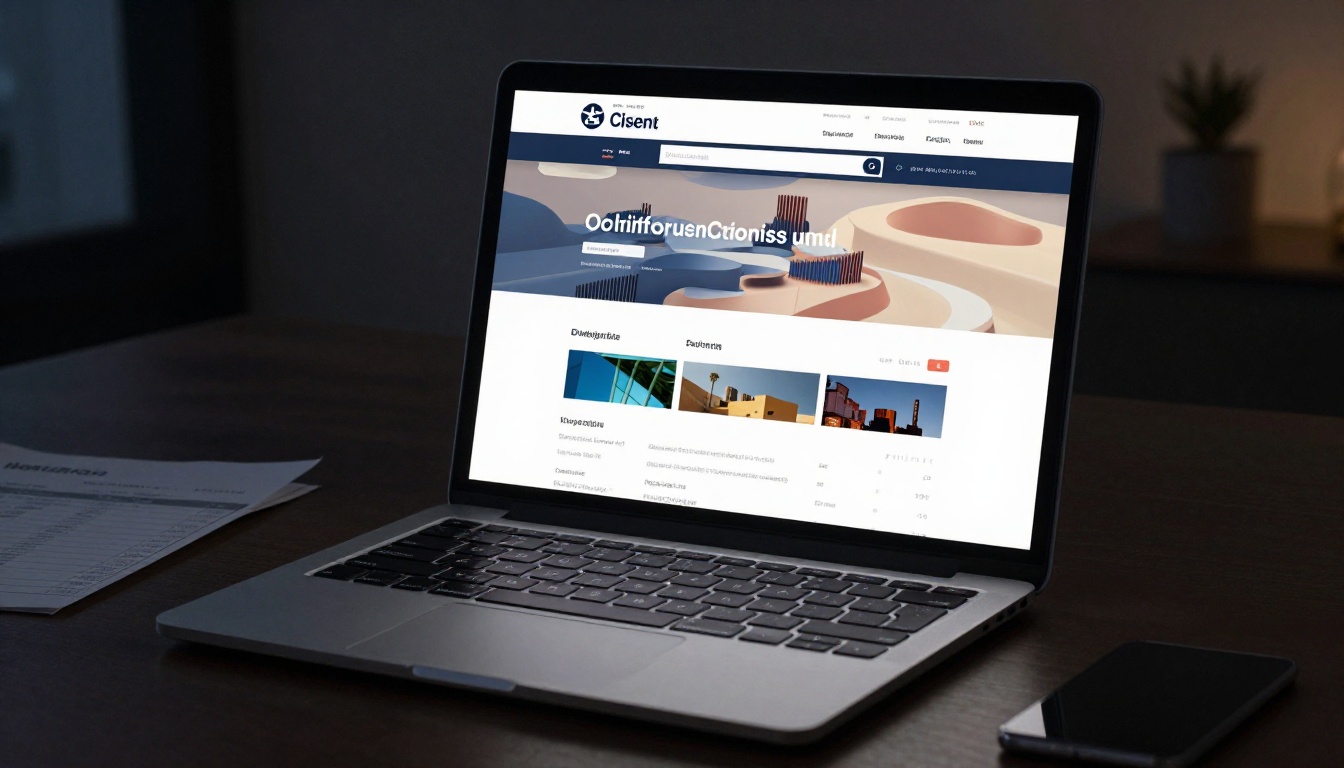
GPT-6 Astra web design: the part of Nate Herk’s demo that actually pays
Verdict: Half-true — works only if you do the unspoken work. The AI really does produce premium-looking sites in one prompt; the income comes from everything that happens after the screenshot.
Nate Herk’s video “GPT-6 Astra FINALLY Kills AI Website Slop” is a highlight reel of what OpenAI’s newest model can build: 3D hero sections, parallax scrolls, a one-minute sizzle reel cut from 152GB of event footage in 35 minutes. It’s genuinely impressive, and he’s clear that these were mostly one-shot prompts. What the video never quite says out loud is how any of this turns into money. That’s the gap worth examining, because “the AI can build it” and “you can get paid for it” are two very different claims.
What the video actually claims
Herk’s pitch is about capability, not a dollar figure. He walks through a dozen AI-generated sites — a content agency, a luxury watch brand, a consulting firm — and argues that GPT-6 Astra (released September 3, 2026) is now the “design king,” beating the Claude-based Fable 5.1 he praised in an earlier video. All of it, he says, leans on his “Scroll Craft skill,” which you can grab free by joining his Skool community, linked in the description.
The income logic sits underneath the surface. At one point he plays a motion-graphics clip and asks: “how much would it have cost you if you paid a human editor to do that? So much more time and money.” That’s the business case in a sentence. Astra collapses production time, so the implied opportunity is obvious — sell design and video work to clients, or build sites for your own ventures, at a fraction of the old cost.
He’s also refreshingly honest about the weak spot. He acknowledges commenters who say “I don’t think these sites convert,” and agrees it depends on what he calls the three P’s: pain, person, promise. A spinning 3D headphone delights a teenager and repels a 70-year-old looking for medication. He raises the objection. He doesn’t resolve it.
What the method actually requires
Here’s the thing the demo glosses: a beautiful site is the cheap part now. Distribution and clients are the expensive part, and Astra doesn’t touch either.
Start with the tool cost, because that part is easy. GPT-6 Astra ships inside ChatGPT’s existing tiers — Plus is $20/month, Pro runs $100 or $200/month — with no separate price for Astra access. So the production input is roughly a Netflix subscription. That’s real leverage, and it’s the true part of the pitch.
Now the work that leverage doesn’t cover. If you’re selling this as a service, you need clients, and client acquisition is where freelance web careers live or die. Independent surveys of freelancers keep finding the same split: the people who earn the most spend less time hunting for work, because they’ve built referral pipelines and a niche, while low earners burn half their week just chasing the next gig. NerdWallet’s own rundown of freelance creative services — writing, graphic design, web design — lists the exact platforms (Upwork, Fiverr, Freelancer.com) where you compete against thousands of others, and notes plainly that you’ll also need your own site and social presence to market yourself (NerdWallet). None of that is a prompt. It’s outreach, portfolio-building, proposals, and follow-up — call it 5 to 15 hours a week before you’ve designed anything.
Then there’s the conversion problem Herk names but sidesteps. A site’s job is to turn visitors into buyers or leads. Immersive 3D scroll effects can hurt that: they slow load times, confuse older or mobile users, and distract from the call to action. If you deliver a gorgeous site that doesn’t convert, you don’t get a second contract. The “taste” Herk keeps invoking — matching the design to the pain, the person, the promise — is a skill, and it’s the skill Astra can’t supply. You bring it or the output is, ironically, a fancier flavor of slop.
Who actually wins this game?
Look closely at who’s demonstrating this, and the pattern is familiar. Herk isn’t a random beginner. He’s a former Goldman Sachs analyst who runs the largest AI community on Skool — over 325,000 free members — plus a $99/month paid tier. He has an audience, a personal brand, and a funnel. When he builds a slick site, the distribution is already solved: he shows it to a quarter-million people who trust him.
That’s the profile that wins with AI production tools right now. Operators who already have an audience or a client book. People with genuine design judgment who use the AI to move faster, not to replace taste they don’t have. Early movers who package a service before the market floods with everyone else who watched the same video. If you have none of those, the model just lowered the cost of the one step that was never your bottleneck.
What you’d realistically earn
The video implies design work is lucrative — and at the top, it is. U.S. Bureau of Labor Statistics data puts the May 2025 median wage for web and digital interface designers at $104,000 and for web developers at $92,650, though the agency notes those figures exclude self-employed freelancers, who make up 13% to 18% of the field (BLS). Freelance-specific trackers land lower and wider: roughly $65,000 to $72,500 a year on average, with beginners often billing $15 to $30 an hour and specialists clearing $100-plus.
But averages hide the ramp. Your realistic first few months as a new AI-web-design freelancer look more like this: $0 while you build a portfolio and land the first client, then a $500 to $1,500 project or two, then — if outreach becomes a habit — something approaching a part-time income after six to twelve months of consistent work. A simple 5-page site typically bills $750 to $1,000; a full e-commerce build, $4,000 to $15,000. Astra can help you deliver those faster. It cannot make the phone ring, and it can’t stop the next freelancer from undercutting you at $200 because their production cost also just collapsed to $20/month.
One more thing, if you’re in the U.S. and thinking of teaching this rather than doing it. The FTC spent 2025 and 2026 tightening the screws on “money-making opportunity” pitches. Its guidance is explicit: sellers must be able to substantiate earnings claims, and “unusually successful earnings by a handful of people don’t by themselves support making a claim that others will or are likely to make the same income” (FTC). Herk’s video doesn’t make an income claim, which keeps him clear of that line. Plenty of copycat “start an AI web agency” pitches won’t be so careful.
Who this is (and isn’t) for
This makes sense if you already have some design sense, a few hours a week for outreach, and either a small audience or the patience to build a client pipeline from cold. It’s a strong fit for existing freelancers, agency owners, and marketers who want to cut production time — the leverage is real and cheap. It’s also fine for building your own business’s site instead of paying an agency.
It’s a poor fit if you’re expecting the AI to be the whole business. If you have no audience, no sales appetite, and you’re picturing passive income from sites that “just convert,” this isn’t that. The tool changed one line item on the cost sheet. It didn’t change the job.
What to remember
Astra is a real leap in AI production, and Herk isn’t overselling the output — those sites look good, and $20 a month for that capability is a genuine bargain. The honest gap is between making a website and making money from one. The first is now nearly free and fast. The second still runs on clients, positioning, conversion, and taste — the unglamorous work no model has automated. Do that work and the tool is a real edge. Skip it and you’ve just generated slop faster.
Sources
- U.S. Bureau of Labor Statistics. “Web Developers and Digital Designers: Occupational Outlook Handbook.” 2026. https://www.bls.gov/ooh/computer-and-information-technology/web-developers.htm
- Federal Trade Commission. “Back up those earnings claims — and other lessons from the FTC’s Labor Task Force work.” 2026. https://www.ftc.gov/business-guidance/blog/2026/06/back-those-earnings-claims-other-lessons-ftcs-labor-task-force-work
- NerdWallet. “25 Side Business Ideas: Top Side Hustles.” 2026. https://www.nerdwallet.com/business/learn/side-business-ideas
Related reading on this site: AI can now run your entire content business — here’s how and 9 one-person businesses with more demand than competition.
- Video: GPT-6 Astra FINALLY Kills AI Website Slop
- Channel: Nate Herk | AI Automation
- Views at review: 265,551
- Watch on YouTube: https://youtube.com/watch?v=QhmhUgccaS0
- Views and figures were accurate at the time of review and may have changed since publication.