AI Side Hustles Half-true — works only if you do the unspoken work
Free AI tools “making paid versions obsolete”: what the video leaves out
Verdict: Half-true — works only if you do the unspoken work. The tools are real and genuinely free; the paid coding agent, the GPU, and the setup time that make them usable are not.
Vaibhav Sisinty opens his video by telling you he personally spends $1,000 to $2,000 a month on AI (over a lakh rupees) and his company spends close to $50,000 (more than 40 lakh rupees). Then he says he canceled a big chunk of it, because every paid tool for images, voice, video, and coding now has a free open-source clone that runs on your own computer. Ten of them, no code required — if you can copy and paste, you’re set. The tools he names are real, and most do roughly what he says. The catch is what sits underneath every single one of them.
What the video actually claims
The framing is simple: paid AI subscriptions are burning your money, and free open-source versions do the same job for zero rupees on your own machine. Sisinty walks through ten tools — Open Montage (agentic video), Ideogram (images with clean text), Voicebox (voice cloning), Nvidia’s Nemotron (an app-building model), Omniroot (a token gateway), Meetly (private meeting notes), Easy Diffusion (local images), Open Generative AI (a 200-model studio), Palmier Pro (an AI video editor), and HyperFrames (code-to-video from HeyGen).
His demos are the pitch. A 40-second cinematic storm video “from one single sentence.” A voice clone of himself built “for free.” An EMI calculator that an AI wrote, tested, and fixed on its own. The recurring line: “You never had to write any code. You just pointed an AI agent at a GitHub link and it did the rest.”
That last sentence is where the sleight of hand lives. The “AI agent” doing all the installing, cloning, and running is, in almost every demo, OpenAI’s Codex. He mentions it in passing — “you tell Codex to go download the repo” — and moves on as if Codex is a given.
What the method actually requires
It isn’t free. Codex is bundled into ChatGPT’s paid plans, not handed out unlimited. As of July 2026, using Codex meaningfully means a ChatGPT Go plan at $8/month, Plus at $20/month, or Pro at $100/month, per OpenAI’s own pricing. Yes, there’s a free tier and you can wire Codex to your own API key — but then you pay per token, and OpenAI shifted Codex to strict token-based billing in April 2026. The “point an agent at a GitHub link” trick that ties all ten tools together assumes you’re already paying for the agent.
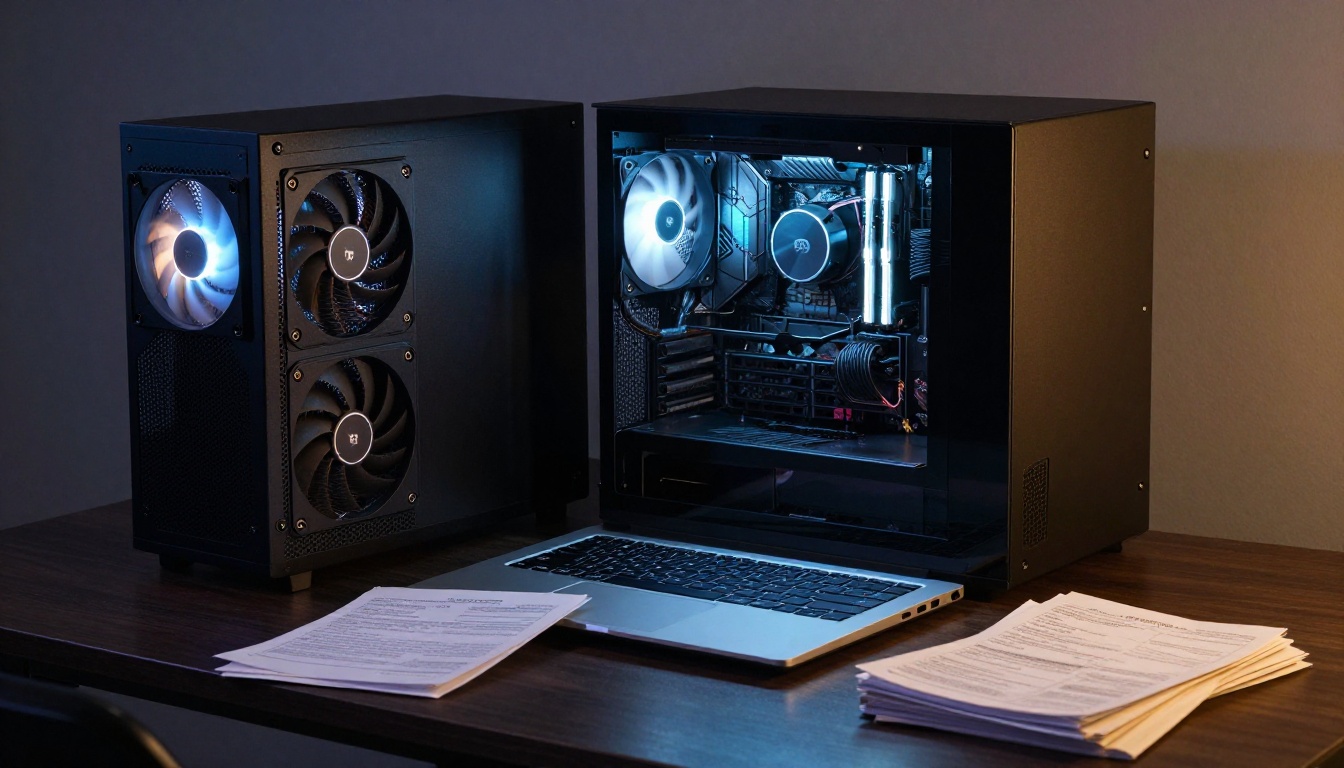
Then there’s the hardware. Half these tools generate images, video, or voice locally, and that runs on your GPU, not on magic. Modern Stable Diffusion-class image models (Easy Diffusion, the studios) want 8GB of NVIDIA VRAM as an honest entry point and 12–16GB to be comfortable. Local video generation — the cinematic clips he shows off — is the most demanding workload there is; a 24GB card like an RTX 4090 is treated as the practical floor for quality results. A 12GB RTX 3060 is the realistic minimum to play at all, and cards climb past $1,000 fast.
Running that hardware isn’t free either. A consumer GPU chugging through generations adds roughly $5–$40 a month to your electricity bill depending on how hard you push it and what you pay per unit. Small next to a $200 subscription — but “zero rupees” it is not.
Here’s the honest cost of the “free” setup, stripped of the demo gloss:
| What the video calls free | What it actually needs | Typical cost |
|---|---|---|
| “Just tell Codex to install it” | A ChatGPT paid plan or API tokens | $8–$100/month |
| Local image/video generation | NVIDIA GPU, 12–24GB VRAM | $400–$2,000+ one-time |
| Running it “on your own machine” | Electricity for the GPU | $5–$40/month |
| “No code, if you can copy-paste” | Comfort with terminals, errors, drivers | your time |
None of that makes the tools bad. It reframes the claim. These are free software packages that ride on paid infrastructure you supply.
Is the quality really equal to the paid tools?
Not yet, and the video quietly admits it in two places. Palmier Pro is Mac-only right now — Windows is “coming soon,” which leaves most of his global audience out. And generating brand-new AI images or video inside Palmier Pro, he concedes, “does cost money because those generation models are paid.” So one of his ten “free” tools has paid generation baked in.
The bigger picture, though, is that open-weight models really are closing the gap — this part of the pitch is legitimate. CNBC reported in July 2026 that the AI race has shifted from bigger models to cheaper, smarter systems, and that open-source Chinese models now run 60% to 90% cheaper than premium offerings from OpenAI and Anthropic, pushing U.S. companies to adopt them. DeepSeek’s open-source releases were trained at a fraction of the cost of closed rivals and can be downloaded and run locally. The direction of travel is exactly what Sisinty describes. What he skips is that “closing the gap” and “identical output on your laptop today” are different sentences.
Voice cloning is a clean example. Voicebox does clone a voice for free — but the paid tool he’s undercutting, ElevenLabs, has a free tier too (about ten minutes of speech a month), and its instant voice cloning starts at $5/month. The gap you’re saving isn’t $200. For most casual users it’s five bucks, and the paid version ships with commercial rights and support the open-source clone makes you assemble yourself.
Who actually wins with this
Think about who’s demonstrating these tools. Someone who spends $1,000–$2,000 a month on AI, already runs Codex daily, and has the hardware to render 8K clips locally. For an operator at that level, swapping a few $20 subscriptions for open-source equivalents is a rounding-error saving with a real upside — control, privacy, no per-seat fees.
The people who win here are developers and content operators who already own the GPU, already pay for a coding agent, and aren’t scared off when the install screen throws an error at 11pm. That’s a legitimate audience. It’s just not “anyone who can copy and paste.”
What you’d realistically get out of it
If you’re a beginner with a mid-range laptop and no paid AI subscription, the realistic outcome is not “I canceled everything and lost nothing.” It’s a weekend of wrestling with terminals, driver mismatches, and models that download 500MB and then won’t run because your GPU is too small. Some tools — Ideogram in a browser, Meetly for private notes — will work fine and genuinely save you a subscription. Others will sit half-installed.
A fair expectation: you might replace $20–$60 of monthly subscriptions with free tools, while spending $8–$20 on the coding agent that installs them and a few hours a month maintaining them. Real savings for the right person. Not the clean “paid versions are obsolete” story the title sells. If your interest is turning these into income rather than saving money, that’s a separate project — closer to the ground covered in 5 proven ways to make money with AI with no experience than to a one-sentence video demo.
Who this is (and isn’t) for
This makes sense if you already own a capable NVIDIA GPU (12GB VRAM or more), you’re comfortable in a terminal, you already pay for an AI coding agent, and privacy or per-seat cost is a real concern for you — a freelancer, a small studio, a developer. It does not make sense if your machine is a basic ultrabook, you’ve never opened a command line, and you’re expecting the polished one-sentence-to-cinematic-video result on your own hardware. For that person, the paid cloud tools he’s dismissing are still the cheaper and faster route once you count your time.
What to remember
The tools are real, open-source, and improving fast — the broad claim that free models are eroding paid ones holds up, and it’s the same shift covered in GLM 5.2 is free and beats Claude on most work. But “free” in this video means “free software running on paid hardware, installed by a paid agent, maintained by you.” Strip out the copy-paste magic and you’re left with a genuinely useful list for people who already have the setup, and a weekend of frustration for those who don’t. Knowing which one you are before you start is the whole game.
Sources
- CNBC. “The AI race is shifting from bigger models to cheaper, smarter systems.” 2026. https://www.cnbc.com/2026/07/10/the-ai-race-is-shifting-from-bigger-models-to-cheaper-smarter-systems.html
- CNBC. “Chinese AI models are gaining ground with U.S. companies as OpenAI, Anthropic costs surge.” 2026. https://www.cnbc.com/2026/07/07/chinese-ai-models-costs-us-openai-anthropic.html
- CNBC. “China’s DeepSeek releases preview of long-awaited V4 model as AI race intensifies.” 2026. https://www.cnbc.com/2026/04/24/deepseek-v4-llm-preview-open-source-ai-competition-china.html
- OpenAI. “ChatGPT pricing.” 2026. https://openai.com/chatgpt/pricing/
- Video: Free AI Tools So Good They’re Making Paid Versions Obsolete
- Channel: Vaibhav Sisinty
- Views at review: 139,382
- Watch on YouTube: https://youtube.com/watch?v=QucgvbO5gsM
Views and figures were accurate at the time of review and may have changed since publication.